
We may earn a commission when you buy through links on this page. It never changes which grinders we pick or what we say about them.
Every welder owns at least one angle grinder, and most own two or three. That is because welding needs so many different discs: a cutting disc to cut the steel, a grinding disc to bevel edges, a wire wheel to clean off mill scale, and a flap disc to blend the finished weld flush.
The biggest frustration is swapping discs over and over. The second is getting into the inside corner of a fillet weld, where a normal gearhead gets in the way. So the best angle grinder for welding has tool-free disc changes (X-LOCK or a quick nut), a slim or flat head, and ideally variable speed so wire wheels and finishing discs run at a sensible rpm.
Cutting the steel first? Our best angle grinder for cutting metal guide covers the cutting side in depth.
At a glance: our top picks
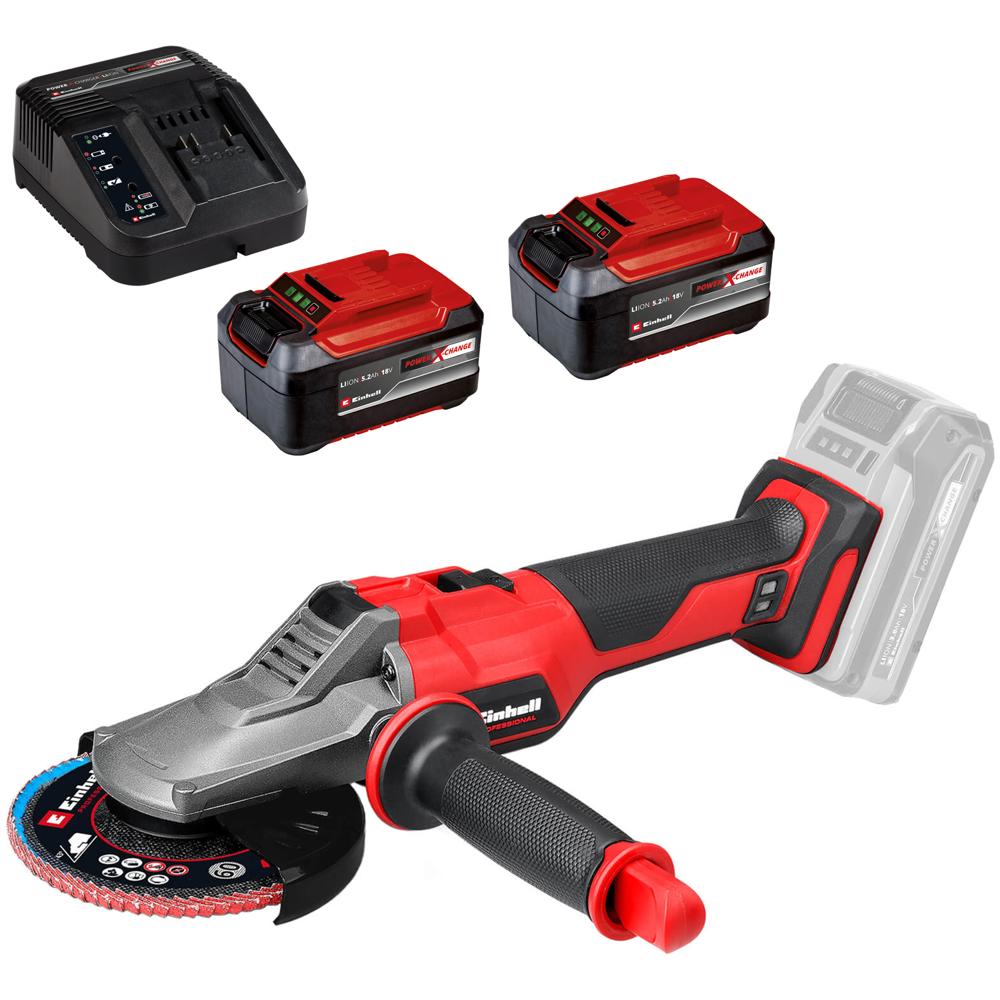
- Best overall for welding: Einhell TP-AG 18/125 F Li BL Flat Head 125mm (2 x 5.2Ah kit) – £229.95 at My Tool Shed
- Best for fast disc changes: Makita GA044G 40v XGT X-LOCK Paddle 125mm (bare) – £274.95 at My Tool Shed
- Best pro flat head: Makita GA055G 40v XGT Flat Head 125mm (bare) – £254.95 at My Tool Shed
- Best variable speed DeWalt: DeWalt DCG409VS 18v Flexvolt Advantage Variable Speed 125mm (bare) – £239.99 at My Tool Shed
- Best for car body work: Sealey CP20VAGX 20v Brushless 115mm (1 x 4.0Ah kit) – £212.95 at My Tool Shed
- Best compact for all-day use: DeWalt DCG404 18v XR Brushless Compact 125mm (bare) – £238.95 at My Tool Shed
How we chose
We compared grinders from our UK retail partners against a welder's typical day and ranked them on:
- Disc swapping: X-LOCK or tool-free nuts save real time between cut, grind and finish.
- Access: flat or compact heads reach fillet welds and inside corners.
- Speed control: variable speed for wire wheels, flap discs and polishing stainless.
- Handling: weight and vibration, because weld prep means hours of grinding.
The best angle grinders for welding to buy in 2026
1. Einhell TP-AG 18/125 F Li BL Flat Head 125mm (2 x 5.2Ah kit)
- Disc size125mm
- HeadFlat, grinds at angles to 43°
- Weight1.57kg
- In the box2 x 5.2Ah, charger, flap disc
Pros
- Flat head gets into tight corners and fillet welds
- Flap disc included
- Brushless with 10 year motor warranty
Cons
- Fixed speed
- No brake
The flat head grinds at angles down to 43°, so you can get right into a fillet weld without the gearbox hitting the upright. It comes with two 5.2Ah batteries and a flap disc, and weighs just 1.57kg. For a home or farm welder it is the most useful grinder in our list for the money.
2. Makita GA044G 40v XGT X-LOCK Paddle 125mm (bare)
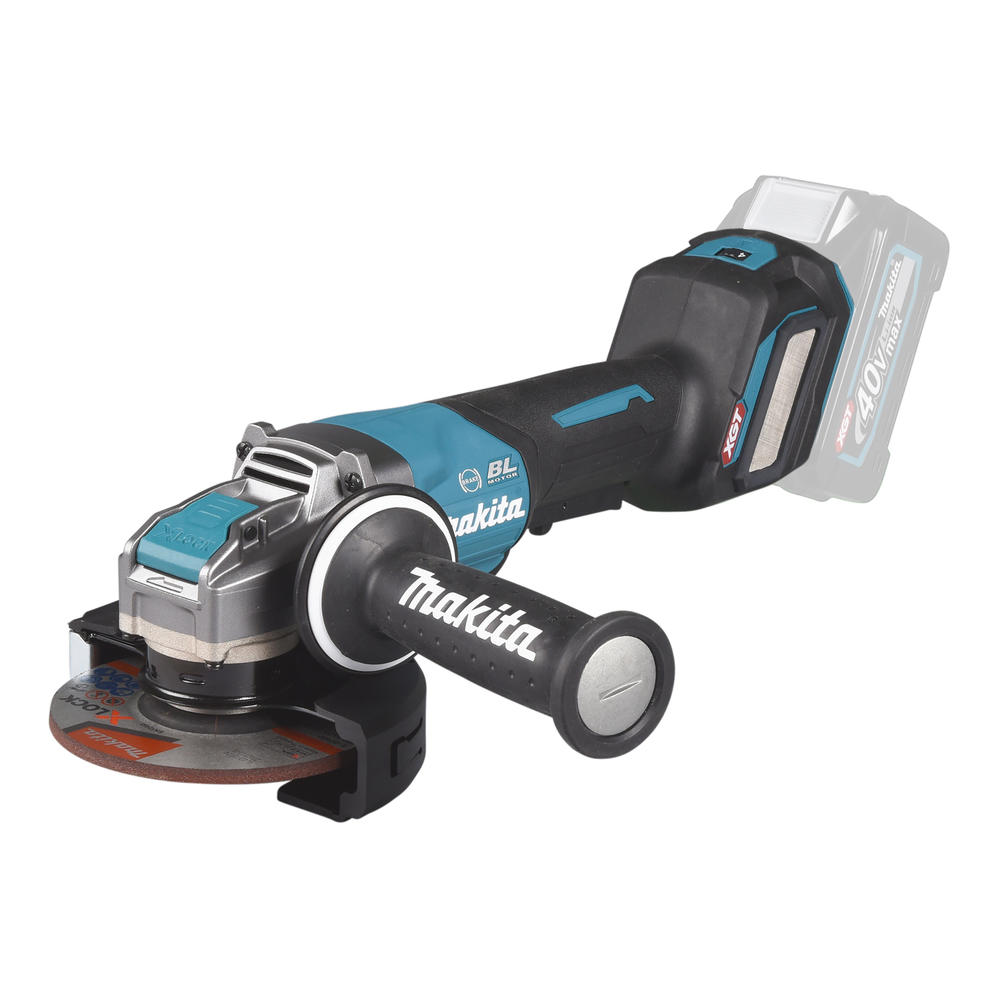
- Disc size125mm
- Speed3,000 to 8,500rpm
- SwitchSafety paddle
- FeatureX-LOCK
Pros
- Swap cutting and flap discs in seconds
- Paddle switch, AFT and brake
- Variable speed
Cons
- Bare tool
- X-LOCK discs cost more
X-LOCK means you press a disc on and it locks, then flick a lever to release it, with no spanner. Switching between cutting, grinding and flap discs becomes a few seconds each time. It also has variable speed, a paddle switch and AFT.
3. Makita GA055G 40v XGT Flat Head 125mm (bare)
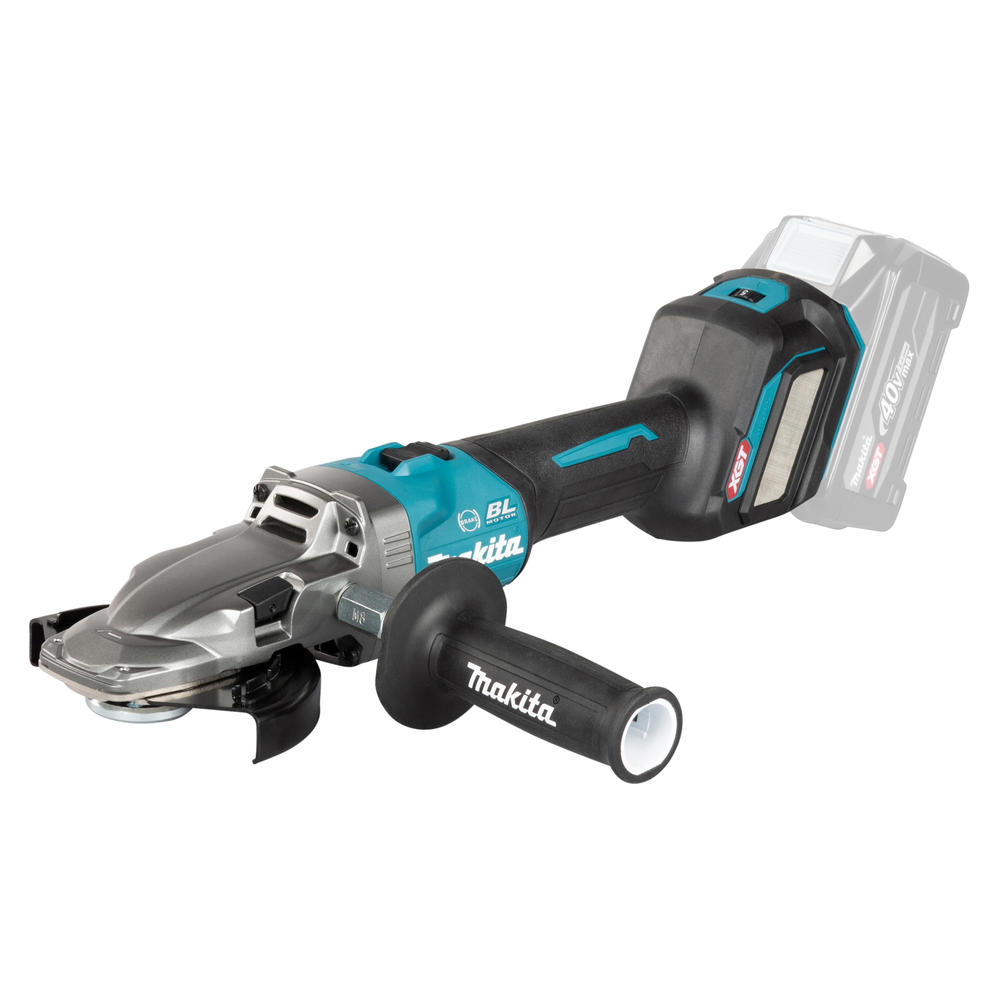
- Disc size125mm
- Speed3,000 to 9,000rpm
- HeadFlat, for tight spaces
- ProtectionXPT dust and water
Pros
- Flat head reaches inside corners
- Variable speed, AFT and brake
- XPT weather sealing
Cons
- Bare tool
- 30mm cut depth
Makita's 40v flat head gets into tight spaces, and its variable speed from 3,000rpm is ideal for wire wheels and finishing discs on stainless. XPT sealing helps in dirty fabrication shops.
4. DeWalt DCG409VS 18v Flexvolt Advantage Variable Speed 125mm (bare)
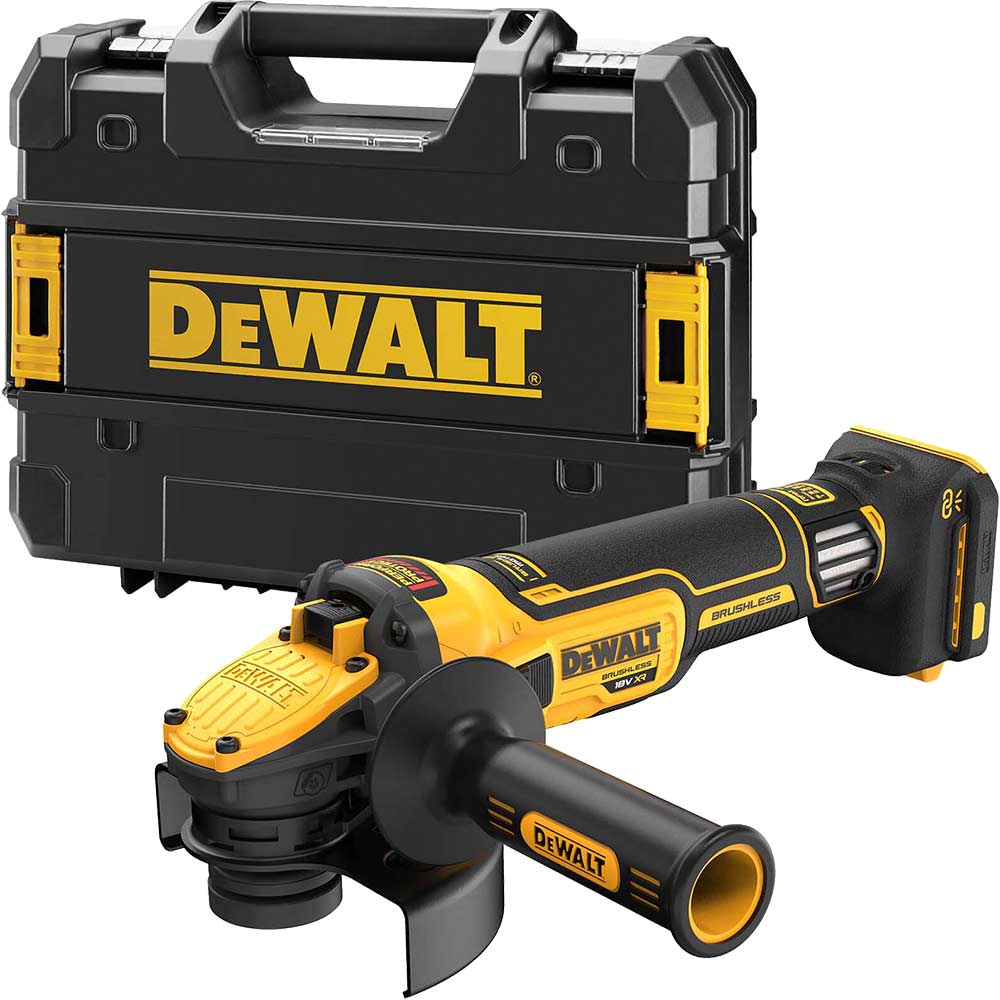
- Disc size125mm
- Batteries18v XR or 54v Flexvolt
- SpeedVariable
- In the boxBare tool, case, side handle
Pros
- Extra power when fitted with a Flexvolt battery
- Variable speed for flap discs and brushing
- Perform & Protect safety features
Cons
- Needs a Flexvolt battery to get the most from it
- Slide switch rather than paddle
If your welding kit is DeWalt, the DCG409VS adds variable speed to the XR range. Fit a Flexvolt battery for heavy bevelling and grinding welds flush. The rubber overmould makes it comfortable for long sessions.
5. Sealey CP20VAGX 20v Brushless 115mm (1 x 4.0Ah kit)
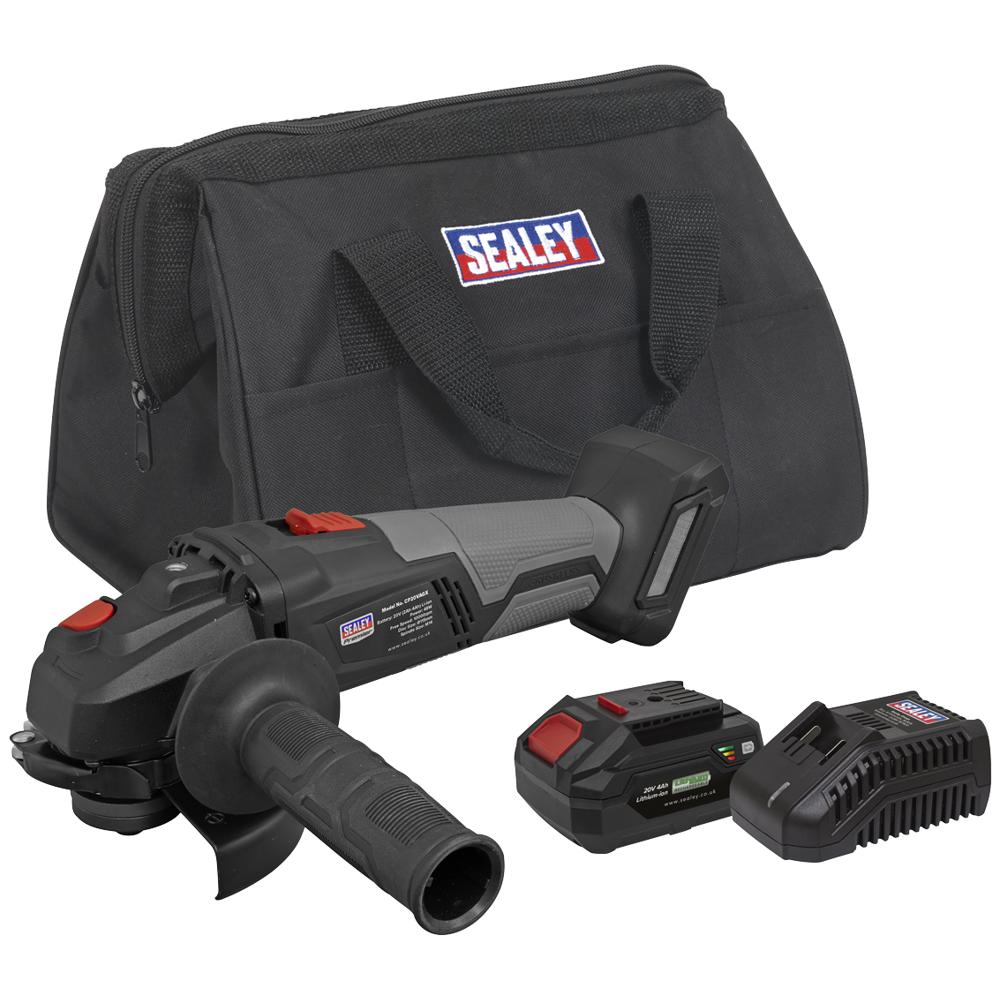
- Disc size115mm
- Power700W brushless
- Speed10,000rpm
- In the box4.0Ah, fast charger, canvas bag
Pros
- Complete brushless kit
- 3 year guarantee on the tool
- Popular with car workshops
Cons
- Only one battery
- No discs supplied
Sealey is a staple in UK garages, and this brushless 115mm kit is well suited to panel repairs: cleaning back to bare metal, grinding spot welds and dressing MIG seams. It comes with a 3 year guarantee on the tool.
6. DeWalt DCG404 18v XR Brushless Compact 125mm (bare)
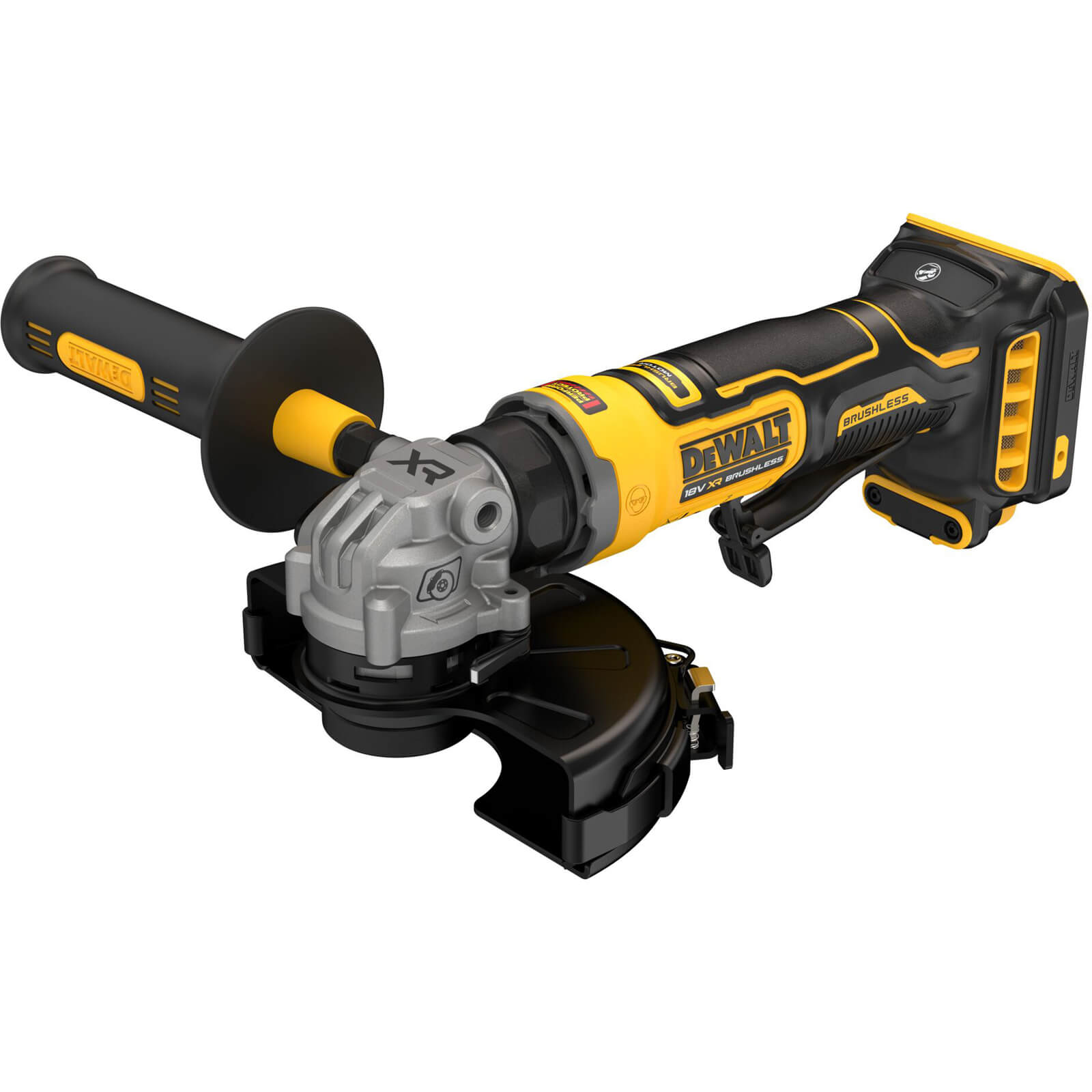
- Disc size125mm
- Power18v XR brushless
- SafetyE-brake, e-clutch, soft start
- In the boxBare tool
Pros
- Slim, compact body is easy to hold all day
- Electronic brake and clutch as standard
- Runs on any DeWalt 18v XR battery
Cons
- Battery and charger extra
- No variable speed
The DCG404's slim body makes it easy to hold for long grinding sessions, and the brake and clutch come as standard. It is a good second grinder to leave fitted with a flap disc.
Best discs for welding prep and finishing
| Stage | Disc | Tip |
|---|---|---|
| Clean mill scale and rust | Twisted knot wire wheel or strip disc | Clean metal makes better welds |
| Bevel thick plate | 6mm grinding disc or 40 grit flap | Aim for a 30 to 35° bevel |
| Remove tacks and spatter | 60 grit zirconia flap disc | Faster than a hard disc and less gouging |
| Blend weld flush | 80 grit flap disc | Keep the disc almost flat |
| Finish stainless | Inox flap disc, then surface conditioning | Lower speed to stop heat tint |
Type 27 flap discs are flat and suit blending on flat surfaces. Type 29 discs are angled and remove metal faster on edges and bevels.
The two-grinder trick
Most welders keep one grinder fitted with a cutting or grinding disc and a second with a flap disc. If you are on a cordless platform, a second bare tool costs less than you might think and saves a lot of disc changes.
Safety when grinding welds
- Never use the side of a cutting disc to grind. It is not designed for side load and can shatter.
- Let hot work cool. Freshly welded steel stays hot enough to burn for several minutes.
- Grinding galvanised steel gives off zinc fumes, so work outside or with fume extraction.
- Wear a full face shield when using wire wheels, as loose wires fly off at speed.
Want speed control for wire wheels and polishing? See our best variable speed angle grinder guide. Choosing a battery platform? Our best cordless angle grinder round-up compares the systems.
Quick buying checklist
- 115mm or 125mm grinder. Light enough to use all day.
- Two grinders if you can: one for cutting, one for flap discs.
- Flap discs: 40 grit to remove, 60 to blend, 80 to 120 to finish.
- Variable speed if you work with stainless or polish.
- INOX discs only on stainless, and keep them separate from carbon steel discs.
Expert corner: Type 27 vs Type 29 flap discs
| Type 27 (flat) | Type 29 (conical) | |
|---|---|---|
| Working angle | 0° to 15° | 15° to 25° |
| Best for | Blending and finishing flat surfaces, outside corners | Fast stock removal, bevels, fillet welds and contours |
| Typical order | Second, to finish | First, to take the weld down |
Ceramic or zirconia? Abrasive makers say ceramic grain cuts cooler and lasts longer, but it needs a powerful grinder and firm pressure to work properly. On a small or cordless grinder, zirconia often performs better because it cuts well at lighter pressure.
Expert tips that save time and money
- Take the weld down with a Type 29, then finish with a Type 27. That order is the standard fabrication workflow.
- Hold the angle. Too steep and you gouge the parent metal. Too flat on a Type 29 and you waste the disc.
- Keep moving. Staying in one spot overheats thin sheet and can warp it.
- Stainless needs lower speed. It holds heat and can discolour or work harden. Our variable speed guide gives speeds for each job.
- Cutting before welding? Our cutting metal guide covers disc thickness and clean, square cuts.
What owners actually say
These points come from UK trade and hobby forums. We have linked each thread so you can read the full discussion.
- MIG Welding Forum members agree that keeping several grinders with different discs fitted "saves changing". (MIG Welding Forum: what size angle grinder)
- One member notes that 115mm flap discs "will fit a 125mm grinder" because they use the same centre hole. (MIG Welding Forum: what size angle grinder)
Beginner mistakes to avoid
We see these again and again
- Using a hard grinding disc to flush welds when a flap disc is faster and smoother.
- Using the same disc on carbon steel and then stainless.
- Grinding at the wrong angle for the disc type.
- Running a ceramic disc on a low-power grinder and wondering why it glazes.
Read the disc before you fit it
Every resin-bonded cutting or grinding disc sold in the UK carries markings under EN 12413. Two matter most:
- The use-by date is stamped on the metal centre ring as a "V" followed by the date, for example V12/2027. It is set no more than three years after manufacture. Out-of-date resin bonds can break up at speed.
- The maximum rpm must be equal to or higher than your grinder's no-load speed.
A disc's limit is really its rim speed, usually 80 metres per second. That is why bigger discs are rated for lower rpm: 80 m/s works out at about 13,300rpm for a 115mm disc, 12,200rpm for 125mm, 8,500rpm for 180mm and 6,600rpm for 230mm. Never fit a worn-down 230mm disc to a small grinder. It is still only rated for about 6,600rpm, and a 125mm grinder spins nearly twice that fast.
Sources: Empire Abrasives: Type 27 vs Type 29 · Norton Abrasives: flap disc do's and don'ts · MIG Welding Forum: what size angle grinder · HSE HSG17: Safety in the use of abrasive wheels · Abrasive wheel marking explained (EN 12413)
Frequently asked questions
What size angle grinder is best for welding?
115mm or 125mm. A 115mm is lighter for finishing and car work, while 125mm is better for bevelling thick plate.
What disc do I use to grind down a weld?
A 60 grit zirconia flap disc removes the weld quickly, then 80 grit to blend it flush. Hard grinding discs are faster but leave gouges.
Is a flat head angle grinder worth it for welding?
Yes, if you grind fillet welds or inside corners. The flat gearhead lets you get the disc in at a low angle.
Do I need variable speed for welding?
It helps. Wire wheels and stainless finishing work better at lower rpm, and it reduces heat tint on thin steel.
What is the difference between Type 27 and Type 29 flap discs?
Type 27 is flat and works at 0 to 15 degrees for blending and finishing. Type 29 is conical and works at 15 to 25 degrees for faster removal and edges.
Why is my ceramic flap disc not cutting?
Ceramic grain needs power and pressure to self-sharpen. On a small or cordless grinder, try zirconia instead.
Can I use 115mm flap discs on a 125mm grinder?
Yes. They share the same centre hole and M14 spindle. Check the guard still covers the disc properly.
More angle grinder guides
Still deciding?
Compare every angle grinder we list, with full specifications and live UK prices.
Browse Angle Grinders