
We may earn a commission when you buy through links on this page. It never changes which grinders we pick or what we say about them.
A manual tile cutter handles straight lines. An angle grinder is what you need for everything else: notches around pipes, L-shaped cuts around door frames, holes for sockets and trimming tiles already on the wall.
The big complaint when using an angle grinder for tile cutting is chipping. The glaze flakes along the cut and the tile is ruined, often an expensive porcelain one. That comes down to three things: the blade, the speed and how much control you have. A small, light grinder with a good diamond blade chips far less than a big 125mm machine running a cheap segmented disc.
That is why our top picks include compact 76mm cut-off tools as well as variable speed 125mm grinders. If you need to cut stone or concrete as well, see our best angle grinder for concrete guide.
At a glance: our top picks
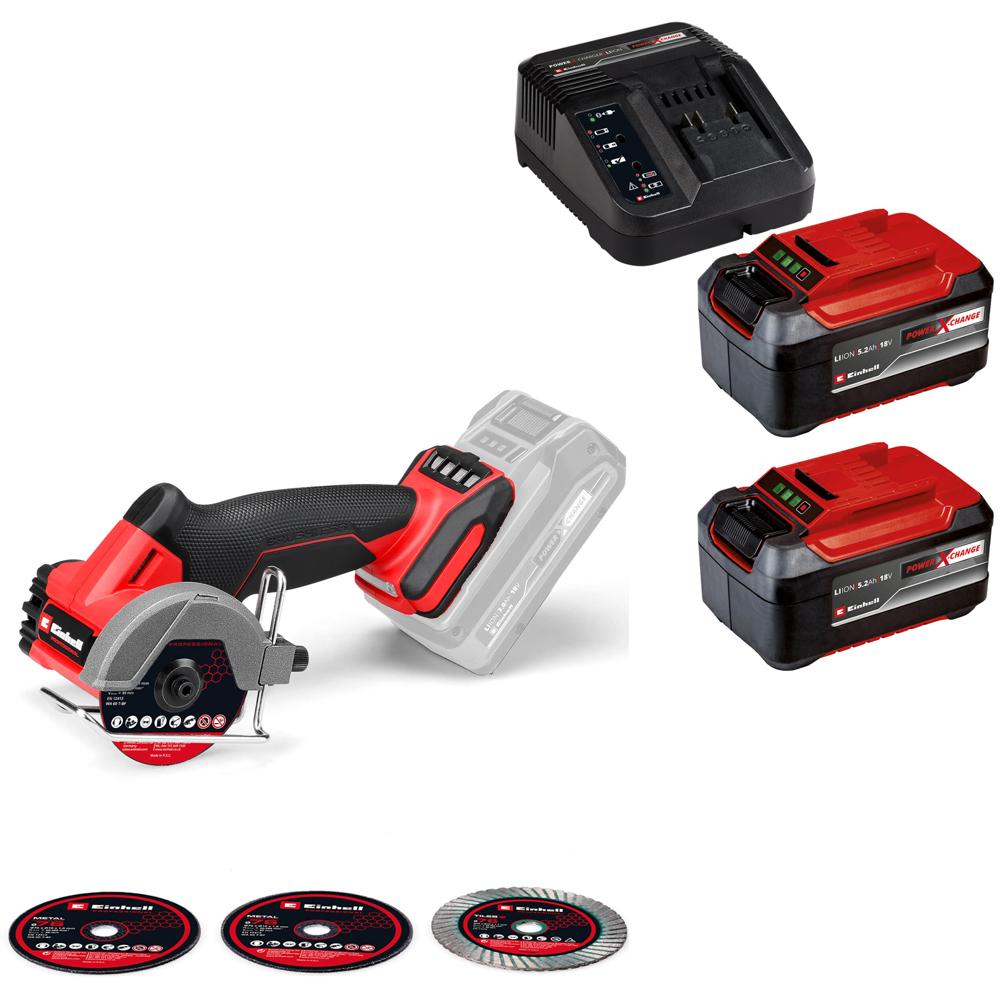
- Best overall for tile cutting: Einhell TP-CO 18/76-C Li BL 76mm (2 x 5.2Ah kit) – £209.95 at My Tool Shed
- Best for dust control: Stanley FatMax V20 SFMCM300 Brushless 76mm (2 x 4.0Ah kit) – £209.95 at My Tool Shed
- Best for DeWalt owners: DeWalt DCG430 18v XR Cut Off Tool 76mm (bare) – £235.95 at My Tool Shed
- Best 125mm for tiles: Bosch AdvancedGrind 18V-80 125mm (2 x 4.0Ah kit) – £211.95 at My Tool Shed
- Best pro 125mm: Makita GA023G 40v XGT Variable Speed 125mm (bare) – £227.95 at My Tool Shed
How we chose
We looked at every grinder and cut-off tool from our UK retail partners that suits ceramic and porcelain, and read tiler forum threads on what goes wrong. We ranked them on:
- Control: weight, size and how easily you can follow a pencil line.
- Speed control: variable speed helps start a cut without the blade skating across the glaze.
- Dust: a dust port or extractor link matters indoors.
- Depth: 76mm tools cut about 16mm deep, which is plenty for floor and wall tiles.
The best angle grinders for tile cutting to buy in 2026
1. Einhell TP-CO 18/76-C Li BL 76mm (2 x 5.2Ah kit)
- Disc size76mm
- Weight0.74kg
- Cut depth16mm
- In the box2 x 5.2Ah, charger, turbo diamond + 3 metal discs
Pros
- Under 1kg
- Variable speed and depth stop
- Motor brake, LED light, four discs included
Cons
- 16mm maximum depth
- 76mm discs cost more per cut
Under a kilo, with variable speed, a depth stop, a brake and an LED light, the TP-CO is close to a perfect tile tool. The kit comes with a turbo diamond disc and two 5.2Ah batteries, so it is ready for a bathroom job straight away. The small disc gives you real control around sockets and pipes.
2. Stanley FatMax V20 SFMCM300 Brushless 76mm (2 x 4.0Ah kit)
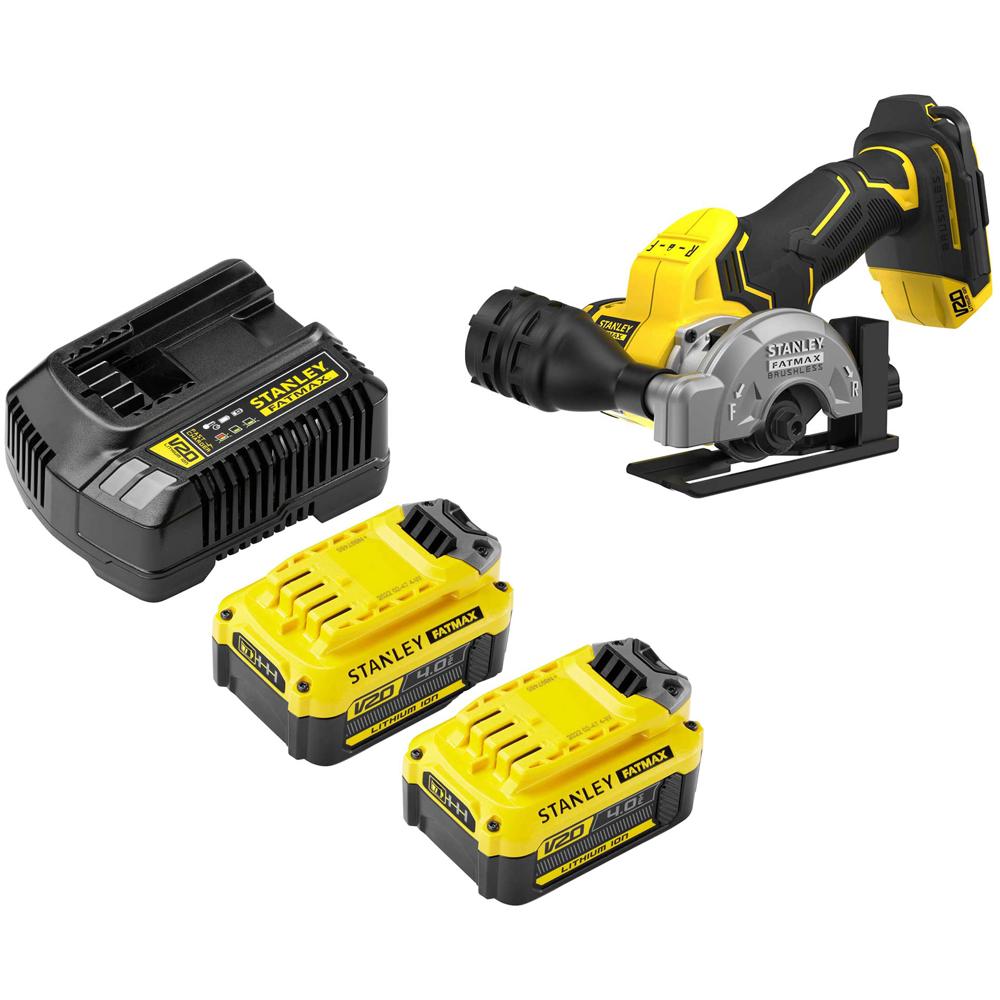
- Disc size76mm
- Speed20,000rpm
- FeatureDust port, depth shoe, LED
- In the box2 x 4.0Ah, charger
Pros
- Dust port on the guard
- Adjustable depth shoe
- Two batteries
Cons
- Small discs only
- V20 range is smaller than DeWalt or Makita
The Stanley's guard has a built-in dust port, so you can plug a vacuum hose straight in. That makes a huge difference when you are cutting tiles in a finished room. The adjustable depth shoe is handy for cutting tiles already fixed to a wall without hitting what is behind them.
3. DeWalt DCG430 18v XR Cut Off Tool 76mm (bare)
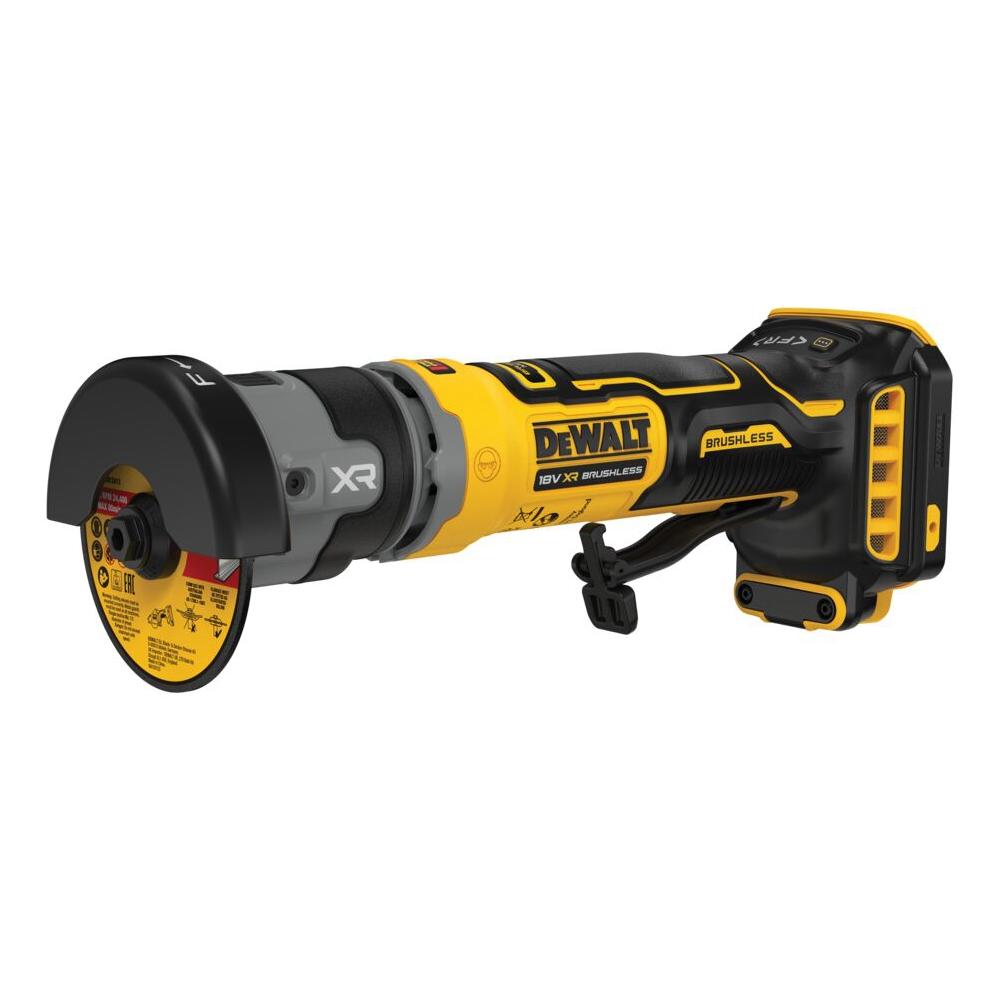
- Disc size76mm
- Weight1.1kg
- Discs includedDiamond and bonded abrasive
- FeatureReversible disc direction
Pros
- Fits where a 125mm grinder cannot
- Reverse direction to send sparks away from you
- Light enough for one hand
Cons
- Shallow cut
- Bare tool
The DCG430 comes with a diamond multi-material disc and reverses direction, so you can push the dust and sparks away from you or from a finished surface. At 1.1kg it is easy to use one-handed for socket cut-outs.
4. Bosch AdvancedGrind 18V-80 125mm (2 x 4.0Ah kit)
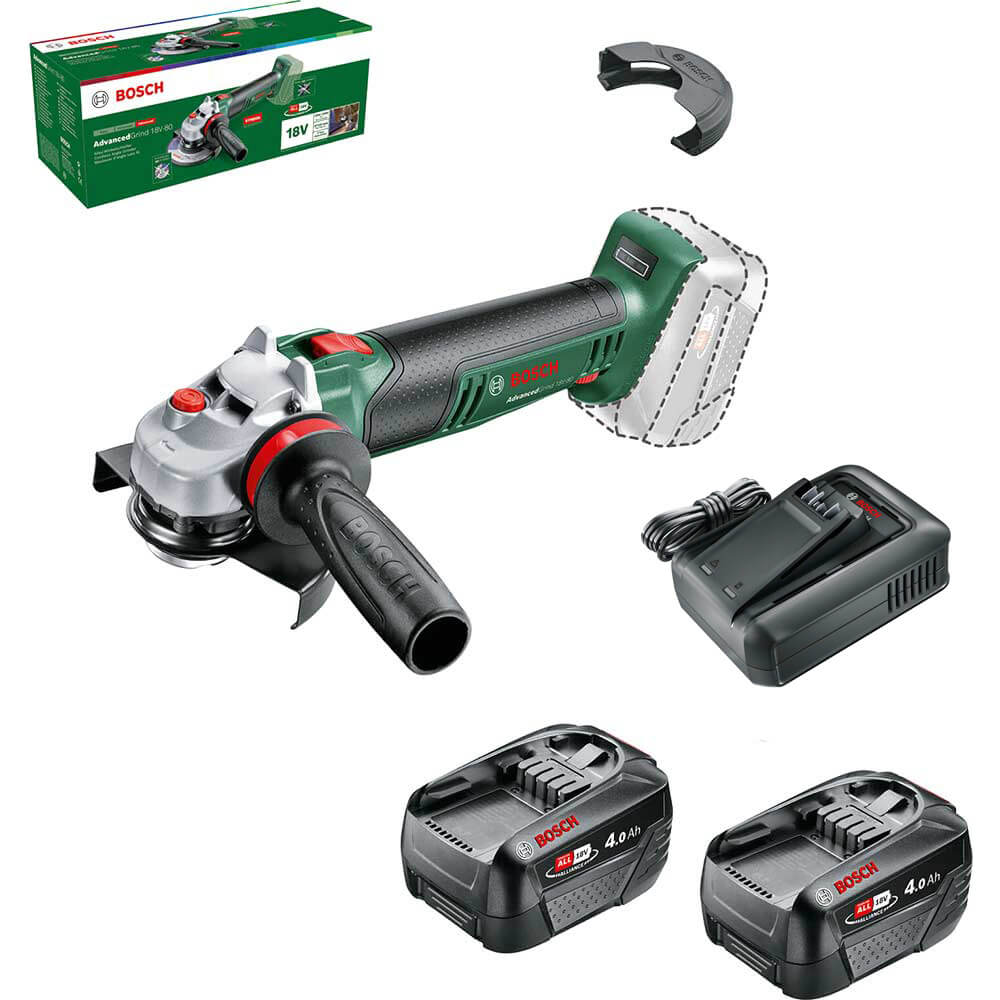
- Disc size125mm
- Speed2,800 to 12,000rpm
- Weight1.7kg bare
- In the box2 x 4.0Ah, charger
Pros
- Widest speed range here, down to 2,800rpm
- Soft start and tool-free quick-change nut
- Power for All batteries fit 100+ tools
Cons
- DIY build, not trade
- No brake
If you want one grinder for tiles and general jobs, this is it. The speed dial goes down to 2,800rpm, the lowest in our list, and a slower start stops the blade skating across the glaze. The soft start helps too. Fit a 125mm continuous-rim porcelain blade.
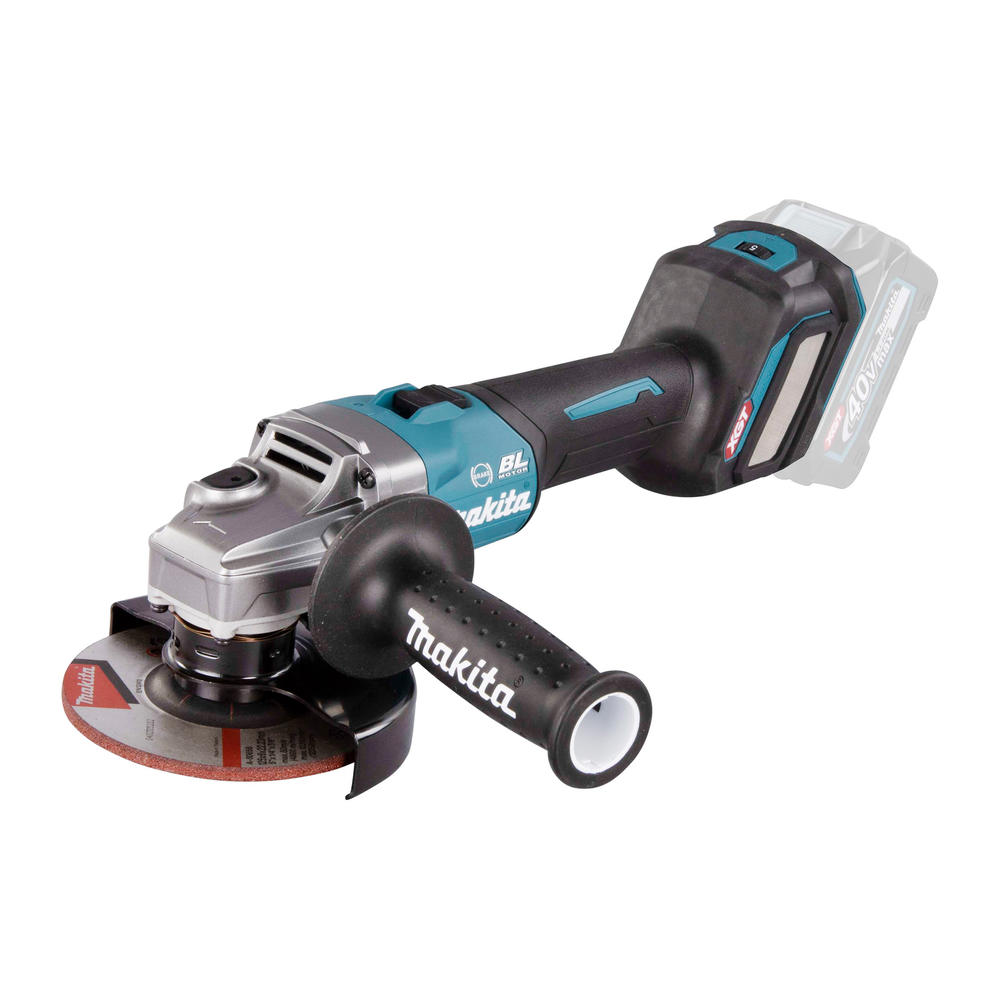
5. Makita GA023G 40v XGT Variable Speed 125mm (bare)
- Disc size125mm
- Speed3,000 to 8,500rpm
- FeatureAWS: starts a Bluetooth extractor
- In the boxBare tool, Makpac
Pros
- Variable speed dial
- AWS switches on a dust extractor automatically
- Safety paddle switch and AFT
Cons
- Bare tool
- Up to 4.4kg with a big battery
For tilers on Makita 40v, the GA023G has variable speed and a safety paddle switch. Its AWS system starts a compatible Bluetooth extractor automatically, so you always cut with extraction running. That cuts down on the fine silica dust that porcelain throws out.
Which diamond blade is best for tiles?
Never cut tile with an abrasive metal disc. You need a diamond blade, and the rim type matters:
| Blade | Best for | Finish |
|---|---|---|
| Continuous rim | Porcelain, glazed ceramic | Cleanest, least chipping |
| Porcelain / mesh turbo | Hard porcelain, large format | Clean and faster |
| Turbo rim | Ceramic, stone, general use | Good, some chipping |
| Segmented | Concrete, brick | Rough, chips tiles badly |
How to cut tile with an angle grinder without chipping
- Mark on masking tape. Tape along the line protects the glaze and is easier to draw on.
- Score first. Run a shallow 1mm pass along the line, then cut deeper on the second pass.
- Cut face up with the glaze toward you so any chipping ends up on the back.
- Support the tile fully on a flat board, with the offcut supported too so it does not snap.
- For sockets, plunge the four sides from the face, then finish the corners from the back so no overcuts show.
Tile dust is silica dust
Porcelain and stone release respirable crystalline silica when cut dry. The HSE lists it as a serious lung hazard. Cut outside where you can, use on-tool extraction or a wet method, and wear at least an FFP3 mask.
Tile edges sometimes need smoothing. A diamond hand pad works, but a variable speed grinder at low rpm with a diamond polishing pad is quicker. See our best variable speed angle grinder guide. If you are choosing a compact tool for other jobs too, our best small angle grinder guide compares the lightest options.
Quick buying checklist
- 115mm or 125mm grinder, ideally with variable speed.
- Continuous rim diamond blade made for porcelain.
- Masking tape, a straight edge and a foam board to support the tile.
- A diamond hand pad to clean up the edge.
- Dust control: cut outside or with extraction, and wear an FFP3 mask.
Expert corner: why blade rim type matters
| Rim | Finish | Use on tiles? |
|---|---|---|
| Continuous rim | Smoothest, least chipping | Yes. Best for porcelain and ceramic. |
| Turbo rim | Good, faster cutting | OK for ceramic and stone. Some chipping on porcelain. |
| Segmented | Rough, fast | No. Made for concrete and brick. |
Porcelain is harder and denser than ceramic, so it heats the blade faster. High speed and a heavy feed are the main causes of chipping. That is why variable speed helps: a slightly lower speed and a steady, light feed give the cleanest edge.
Expert tips that save time and money
- Score, then cut. A shallow first pass along the taped line, then two or three more, gives far less chipping than one deep cut.
- Cut L-shapes from both directions and stop at the corner, rather than overrunning into the tile.
- For socket holes, plunge from the back in short strokes, then finish with a diamond file.
- Tile and concrete dust contain silica. See the extractor classes in our concrete guide.
- Short of space? A 76mm cut-off tool is excellent for notches. See our small angle grinder guide.
Beginner mistakes to avoid
We see these again and again
- Using a segmented concrete blade on porcelain.
- Forcing the cut. This is the main cause of blown-out edges.
- Cutting with the tile unsupported so it snaps near the end.
- Cutting indoors with no dust control.
Read the disc before you fit it
Every resin-bonded cutting or grinding disc sold in the UK carries markings under EN 12413. Two matter most:
- The use-by date is stamped on the metal centre ring as a "V" followed by the date, for example V12/2027. It is set no more than three years after manufacture. Out-of-date resin bonds can break up at speed.
- The maximum rpm must be equal to or higher than your grinder's no-load speed.
A disc's limit is really its rim speed, usually 80 metres per second. That is why bigger discs are rated for lower rpm: 80 m/s works out at about 13,300rpm for a 115mm disc, 12,200rpm for 125mm, 8,500rpm for 180mm and 6,600rpm for 230mm. Never fit a worn-down 230mm disc to a small grinder. It is still only rated for about 6,600rpm, and a 125mm grinder spins nearly twice that fast.
Sources: Segmented vs turbo vs continuous rim blades · Family Handyman: cutting tile with a grinder · RVT Group: M-class or H-class? · HSE HSG17: Safety in the use of abrasive wheels · Abrasive wheel marking explained (EN 12413)
Frequently asked questions
Can you cut porcelain tiles with an angle grinder?
Yes. Use a continuous-rim or porcelain diamond blade, score a shallow first pass and support the tile fully. Porcelain is hard, so let the blade do the work.
What size angle grinder is best for tiles?
A 76mm cut-off tool gives the most control for sockets and notches. A 115mm or 125mm grinder is better for long cuts in thick floor tiles.
Why do my tiles chip when I cut them?
Usually the wrong blade (segmented), cutting from the back, or pushing too fast. Switch to a continuous-rim blade and cut from the glazed face.
Should I cut tiles wet or dry with a grinder?
Most grinders are not designed for water. Cut dry with extraction and an FFP3 mask, or wet the line with a sponge only if the manufacturer allows it.
Continuous rim or turbo blade for tiles?
Continuous rim for porcelain and ceramic, where edge finish matters. Turbo cuts faster and suits stone and rough cuts.
How do I cut an L-shape in a tile with a grinder?
Cut each leg from the edge in toward the corner and stop exactly at the corner. Finish the corner with a few careful plunges or a diamond file.
What speed should I cut tiles at?
Slightly below full speed with a light, steady feed gives the cleanest edge on porcelain. Too fast and too hard causes chipping.
More angle grinder guides
Still deciding?
Compare every angle grinder we list, with full specifications and live UK prices.
Browse Angle Grinders