
We may earn a commission when you buy through links on this page. It never changes which grinders we pick or what we say about them.
Concrete is where small grinders give up. A 115mm grinder cuts about 28mm deep, which is not enough for a paving slab, and it will overheat trying. The best angle grinder for concrete is usually a 230mm (9 inch) machine that cuts 65 to 70mm deep, or a dedicated grinding planer if you are levelling a floor.
The other problem is dust. Cutting and grinding concrete releases respirable crystalline silica, which the HSE ranks as one of the biggest health risks in construction after asbestos. A grinder you cannot fit extraction to is a false economy.
First decide whether you are cutting (slabs, blocks, kerbs, chasing) or grinding (removing high spots, levelling, taking off paint or adhesive). They need different tools. If you are only cutting tile or thin stone, our best angle grinder for tile cutting guide is a better fit.
At a glance: our top picks
- Best overall for cutting concrete: Makita GA9071X1 Paddle Switch 2,800W 230mm (240v corded) – £269.95 at My Tool Shed
- Best for grinding concrete floors: Makita PC5010C Concrete Grinding Planer 125mm (240v) – £393.95 at My Tool Shed
- Best cordless 230mm: DeWalt DCG460 54v Flexvolt 230mm (2 x 9Ah kit) – £729.95 at My Tool Shed
- Best budget cordless 230mm: Einhell AXXIO 36/230 Q Brushless 230mm (2 x 4.0Ah kit) – £238.95 at My Tool Shed
- Best single-battery 230mm: Milwaukee M18 FLAG230XPDB Fuel 230mm (bare) – £313.95 at My Tool Shed
- Best for Makita 40v owners: Makita GA038G 40v XGT 230mm (bare) – £329.99 at My Tool Shed
How we chose
We compared every large grinder and concrete tool from our UK retail partners and ranked them on:
- Depth of cut: 230mm grinders cut 65 to 70mm, enough for most slabs and blocks in one pass.
- Sustained power: concrete loads a motor constantly, so we favoured high wattage and constant speed control.
- Kickback protection: a 230mm disc kicking back is dangerous, so brakes and AFT or clutch systems scored highly.
- Dust extraction: shroud compatibility, or an AWS or wireless link to start an extractor.
The best angle grinders for concrete to buy in 2026
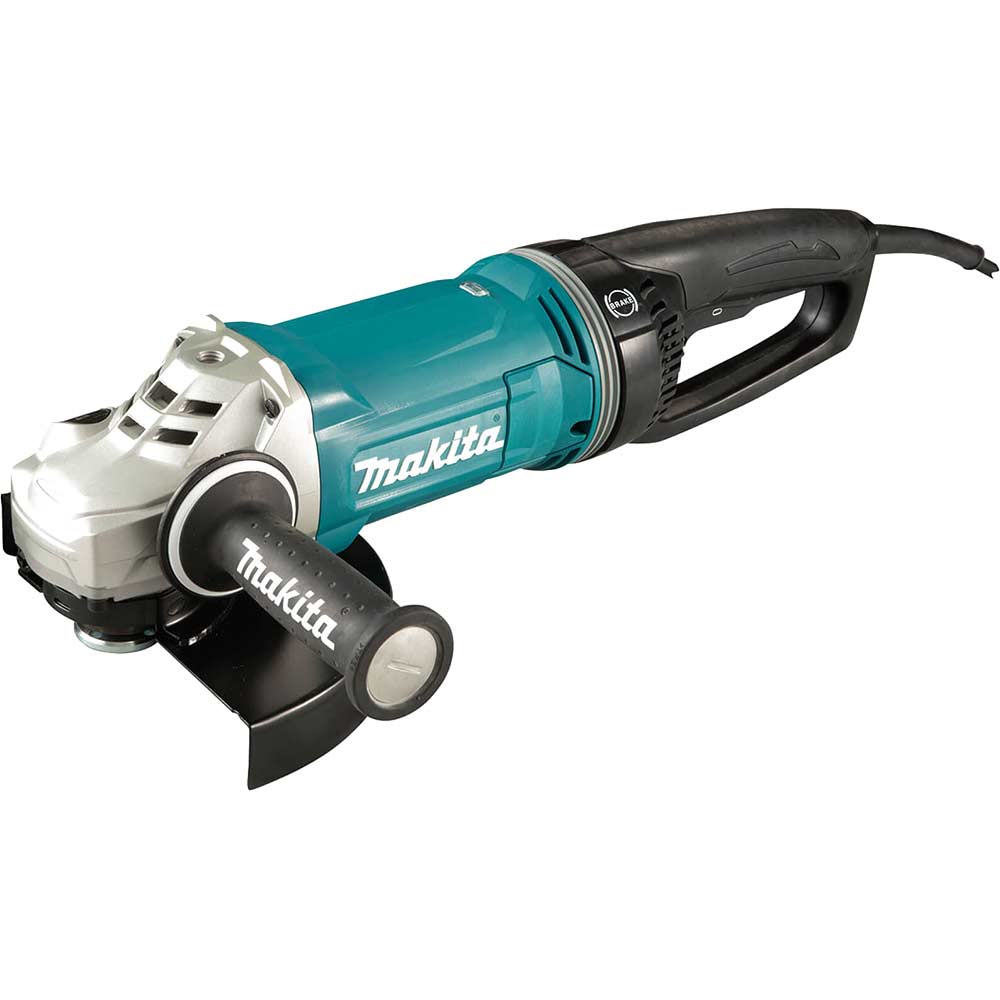
1. Makita GA9071X1 Paddle Switch 2,800W 230mm (240v corded)
- Disc size230mm
- Power2,800W
- Speed6,600rpm
- SafetyAFT, brake, paddle, soft start
Pros
- 2,800W for less than most cordless 230mm kits
- D-handle rotates for cutting
- Anti-vibration side grip
Cons
- Over 6kg
- Corded
A 2,800W corded 230mm grinder for less than most cordless kits. The rotating D-handle lets you line up cuts across a slab comfortably, and AFT, the paddle switch and the brake cover the safety side. It is heavy at over 6kg, but that weight helps it cut steadily through concrete.
2. Makita PC5010C Concrete Grinding Planer 125mm (240v)

- Disc size125mm cup wheel
- Power1,400W
- Speed4,000 to 9,000rpm
- FeatureRemovable front cover for flush work
Pros
- Built for grinding concrete flat
- Dust shroud designed in
- Grinds right up to walls
Cons
- Not a cutting tool
- Needs an M-class extractor
If your job is grinding concrete rather than cutting it, this is the tool. It runs a 125mm diamond cup wheel inside a built-in shroud, and the front cover comes off so you can grind right up to a wall. Connect it to an M-class extractor. Variable speed down to 4,000rpm helps with softer screeds and coatings.
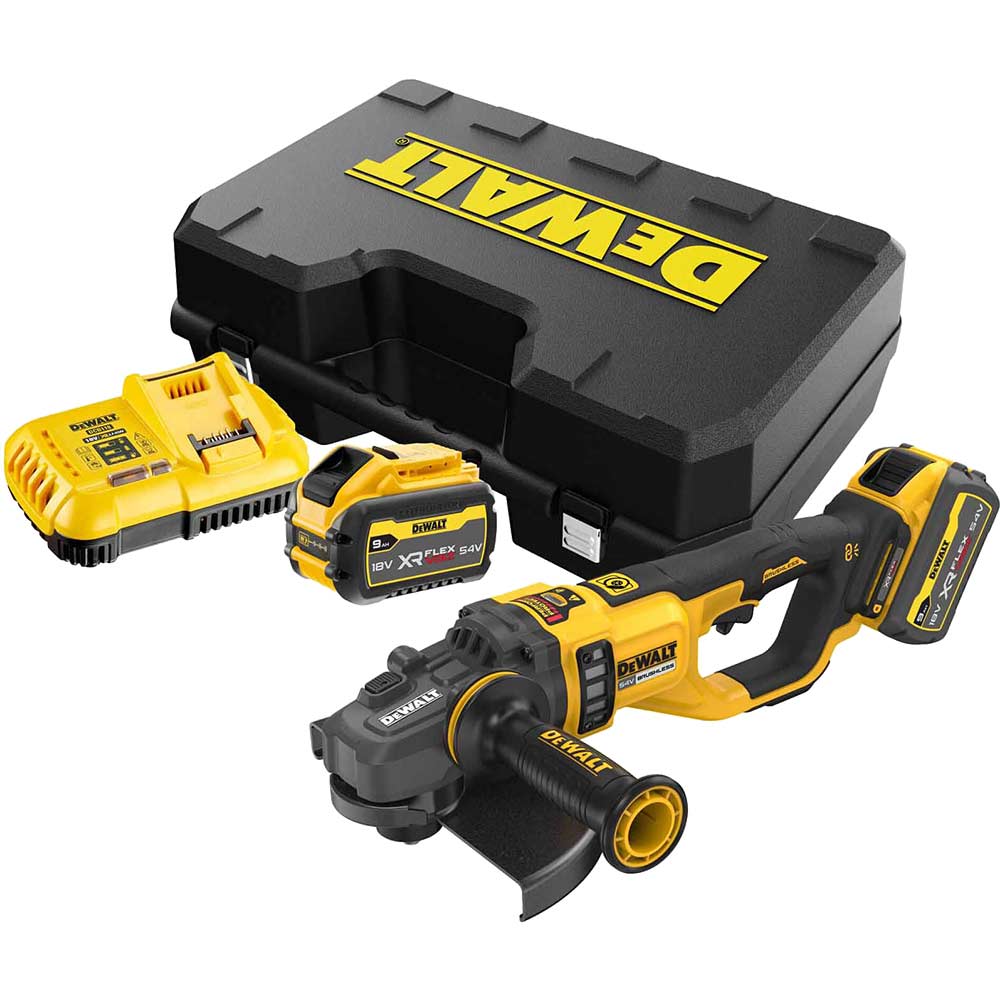
3. DeWalt DCG460 54v Flexvolt 230mm (2 x 9Ah kit)
- Disc size230mm
- Power2,800W
- Speed6,000rpm
- In the box2 x 9Ah, charger, case
Pros
- 2,800W: matches big corded grinders
- Wireless tool control for dust extractors
- Brake, clutch and soft start
Cons
- Expensive
- 5.94kg with battery
At 2,800W the DCG460 matches big corded grinders, with no cable across the site. The kit includes two 9Ah Flexvolt batteries, which you need for concrete. Wireless tool control can start a compatible DeWalt extractor. It is expensive, but it has everything you need.
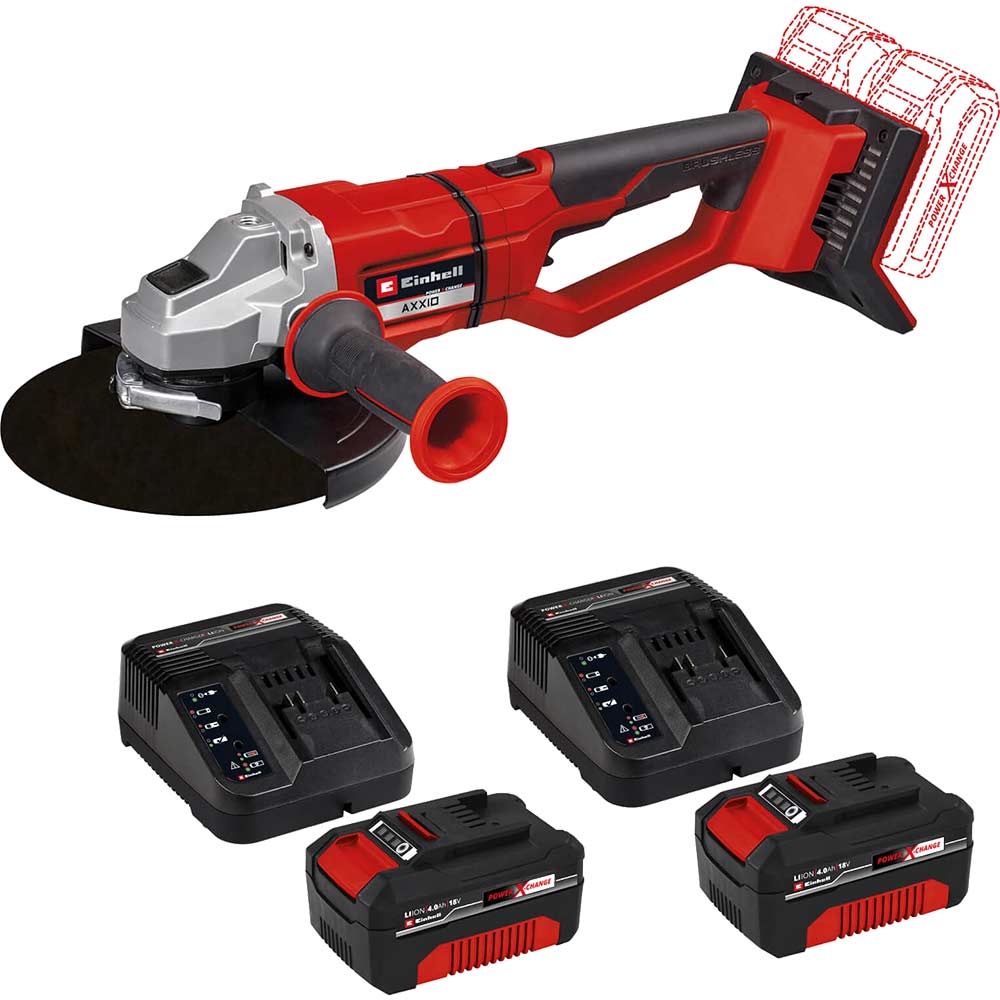
4. Einhell AXXIO 36/230 Q Brushless 230mm (2 x 4.0Ah kit)
- Disc size230mm
- Power36v (2 x 18v)
- Cut depth70mm
- In the box2 x 4.0Ah, 2 chargers
Pros
- Cheapest cordless 230mm kit we found
- 70mm depth of cut
- Rotating rear handle, battery spark shield
Cons
- 4.0Ah packs run down fast on 230mm
- No brake
The cheapest cordless 230mm kit we found. It runs on two 18v Einhell batteries and cuts 70mm deep. The 4.0Ah packs will not last long in concrete, so buy bigger batteries if you have a lot to cut. The rotating rear handle and spark shield over the batteries are good touches.
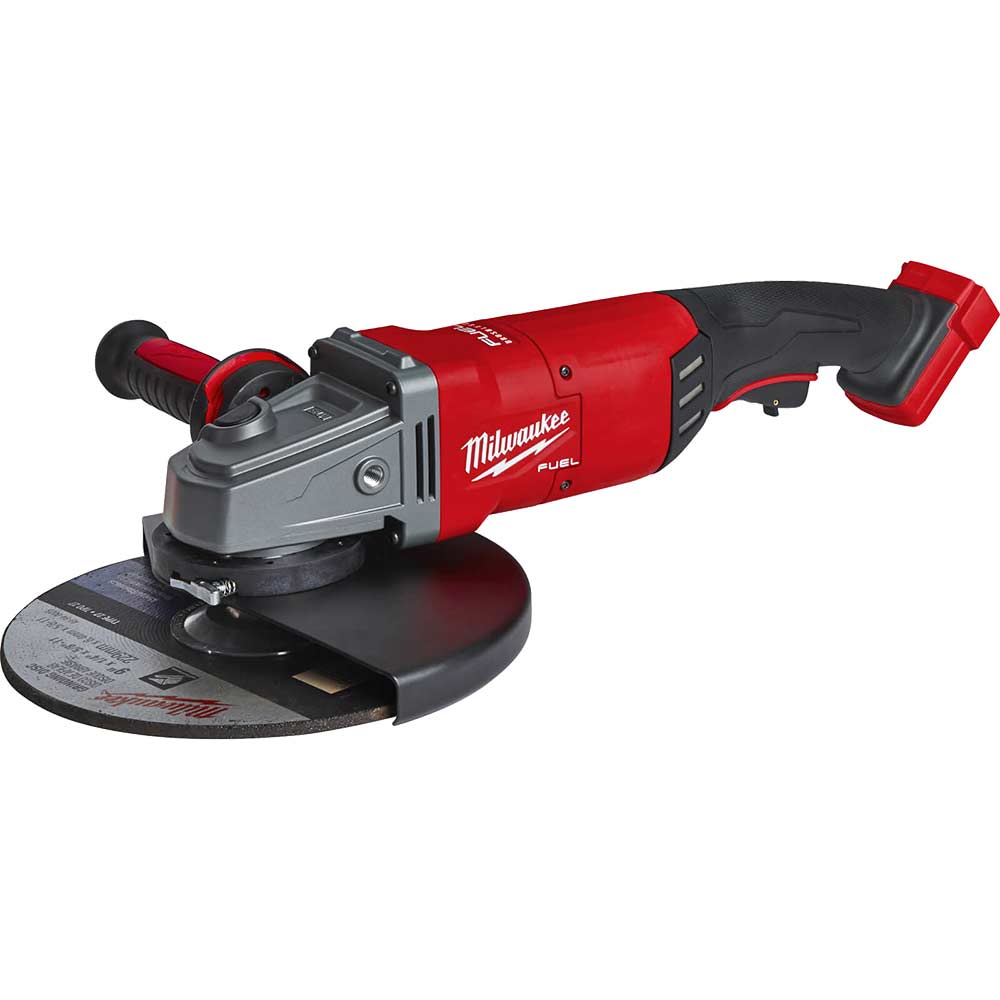
5. Milwaukee M18 FLAG230XPDB Fuel 230mm (bare)
- Disc size230mm
- PowerSingle 18v battery
- Cut depth65mm
- SafetyDisc brake, paddle switch
Pros
- 230mm on one 18v battery
- Fixtec tool-free nut
- Anti-vibration side handle
Cons
- Needs High Output batteries to perform
- Bare tool
Milwaukee's FLAG230 runs a 230mm disc from one M18 battery, so it weighs less than twin-battery machines. Pair it with a High Output 8Ah or 12Ah pack for concrete. The disc brake and non-locking paddle switch make it a safer big grinder.
6. Makita GA038G 40v XGT 230mm (bare)
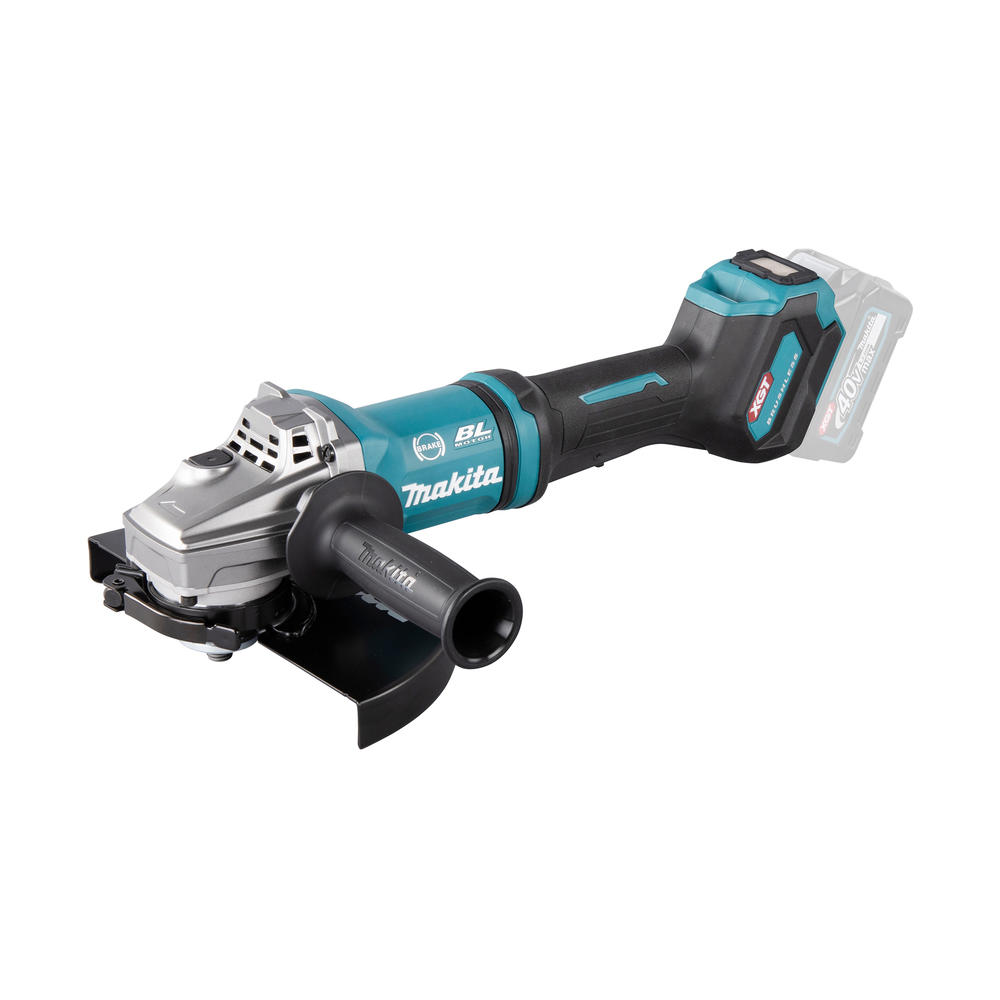
- Disc size230mm
- Speed6,600rpm
- FeatureAWS dust extractor link
- SafetyAFT, brake, soft start
Pros
- Single 40v battery, no twin packs
- AWS starts your extractor
- AFT and brake
Cons
- 4.6kg to 7.4kg depending on battery
- Bare tool
Makita's 40v 230mm uses one XGT battery and has AWS, which starts a paired extractor whenever you pull the trigger. That makes staying on the right side of silica rules much easier on site.
Best diamond blades and wheels for concrete
| Job | Use |
|---|---|
| Cutting slabs, kerbs, blocks | Segmented diamond blade (general purpose or concrete grade) |
| Cutting reinforced concrete | Premium diamond blade rated for rebar |
| Grinding high spots | Double-row diamond cup wheel |
| Removing paint and adhesive | PCD cup wheel |
Match blades to the material. "Hard" concrete needs a blade with a softer bond, and soft, abrasive block needs a harder bond. A mismatched blade glazes over and stops cutting, and people then push harder, which is when blades overheat and fail.
Silica dust: what the rules say
The HSE says cutting concrete dry without controls is not acceptable. Use a shroud connected to an M-class or H-class extractor, or water suppression, plus FFP3 respiratory protection. Household vacuums clog in minutes and blow the finest dust straight back out.
Cutting concrete safely with a big grinder
- Mark and score. Cut a shallow guide groove first, then deepen it in passes of 20 to 25mm.
- Support both sides so the slab cannot close on the blade. A pinched 230mm blade kicks hard.
- Keep the blade straight. Never twist to steer, as diamond blades are not built for side load.
- Let it cool. If the blade stops cutting, pull it out and run it free for a few seconds.
Not sure you need 230mm? Our best 9 inch angle grinder guide compares big grinders in more depth, and our most powerful angle grinder round-up covers the high-output models.
Quick buying checklist
- Cutting slabs or blocks? A 230mm grinder cuts 65 to 70mm deep.
- Chasing or small cuts? A 125mm with a dust shroud is easier to control.
- Segmented diamond blade for concrete. Not an abrasive stone disc.
- M-class dust extractor and an FFP3 mask. This is not optional on site.
- Kickback protection and a brake on anything 180mm or larger.
Expert corner: L, M and H class extractors explained
Dust extractors are rated by how much fine dust they let through. For concrete, the difference matters because silica particles are too small to see.
| Class | Filters at least | Use for |
|---|---|---|
| L | 99% | General non-hazardous dust. Not suitable for concrete. |
| M | 99.9% | Concrete, plaster, hardwood. The HSE minimum for silica on site. Must have an airflow alarm. |
| H | 99.995% | Highest-risk dusts. The safer choice for heavy silica work. |
Does extraction really work? Yes. A US study of masonry cutting found a grinder with a shroud and vacuum cut respirable quartz exposure by about 98%. Water suppression cut it by at least 90%. A household or DIY shop vac is L class at best and should not be used.
Expert tips that save time and money
- Cut in passes. Take 10mm to 20mm per pass rather than forcing full depth. The blade stays cool and cuts faster overall.
- A glazed blade stops cutting. If a diamond blade stops biting, a few cuts into an abrasive block or soft brick will usually expose fresh diamonds again.
- Turbo rim blades are a good middle ground for mixed brick and concrete. They cut faster than continuous rim and more cleanly than segmented.
- Plan the cut so the slab cannot close on the blade. Support both sides, and cut from both faces on thick slabs.
- A 230mm grinder is the highest-risk size. Read the handling advice in our 9 inch angle grinder guide before you use one.
- Cutting tiles or thin stone instead? Our tile cutting guide covers the blades for a chip-free edge.
Beginner mistakes to avoid
We see these again and again
- Dry cutting concrete indoors with no extraction.
- Using a household or shop vacuum for concrete dust.
- Wearing a paper dust mask instead of a fit-tested FFP3.
- Using a continuous rim tile blade on concrete. It clogs and overheats.
Read the disc before you fit it
Every resin-bonded cutting or grinding disc sold in the UK carries markings under EN 12413. Two matter most:
- The use-by date is stamped on the metal centre ring as a "V" followed by the date, for example V12/2027. It is set no more than three years after manufacture. Out-of-date resin bonds can break up at speed.
- The maximum rpm must be equal to or higher than your grinder's no-load speed.
A disc's limit is really its rim speed, usually 80 metres per second. That is why bigger discs are rated for lower rpm: 80 m/s works out at about 13,300rpm for a 115mm disc, 12,200rpm for 125mm, 8,500rpm for 180mm and 6,600rpm for 230mm. Never fit a worn-down 230mm disc to a small grinder. It is still only rated for about 6,600rpm, and a 125mm grinder spins nearly twice that fast.
Sources: Research: controlling silica in masonry cutting (NIH/PMC) · RVT Group: M-class or H-class? · Segmented vs turbo vs continuous rim blades · HSE HSG17: Safety in the use of abrasive wheels · Abrasive wheel marking explained (EN 12413)
Frequently asked questions
What size angle grinder do I need to cut concrete?
For slabs and blocks, a 230mm (9 inch) grinder cuts 65 to 70mm deep. A 125mm grinder is fine for chasing, small cuts and scoring.
Can I grind concrete with a normal angle grinder?
Yes, with a diamond cup wheel and a dust shroud. For big areas a concrete planer such as the Makita PC5010C is faster and much cleaner.
Is cordless powerful enough for concrete?
Top cordless machines like the DeWalt DCG460 match 2,800W corded grinders, but they need big 9Ah or larger batteries. For long jobs, corded is cheaper.
Do I need a dust extractor to cut concrete?
Yes. HSE guidance expects on-tool extraction with an M-class or H-class vacuum, or water suppression, plus an FFP3 mask.
What is the difference between M-class and H-class extractors?
M-class filters at least 99.9% of dust and is the HSE minimum for silica. H-class filters at least 99.995% and is used for the most hazardous dusts.
Why has my diamond blade stopped cutting?
It has probably glazed over. A few cuts into a soft, abrasive material such as breeze block usually exposes fresh diamond. If not, the blade bond may be wrong for the material.
Which diamond blade is best for concrete?
A segmented blade for fast, rough cuts, or a turbo rim blade for a cleaner edge. Buy a reinforced-concrete rated blade if there may be rebar.
More angle grinder guides
Still deciding?
Compare every angle grinder we list, with full specifications and live UK prices.
Browse Angle Grinders