
We may earn a commission when you buy through links on this page. It never changes which grinders we pick or what we say about them.
Cutting metal is the job most people buy an angle grinder for. Chopping a seized bolt, trimming box section for a gate, cutting rebar or slicing sheet steel all look easy on video, and they are, as long as the grinder and disc suit the job.
The common complaints from new owners are the same every time: the disc binds and the grinder kicks, the cut edge turns blue and needs cleaning up, the battery dies halfway through a length of angle iron, or a cheap disc shatters. The best angle grinder for cutting metal handles all four. It has enough power to keep speed under load, an electronic clutch or kickback brake, and a 125mm disc so you get enough depth for common sections.
Below are our picks, then the disc and technique advice that makes the biggest difference to how cleanly metal cuts. If you also plan to join what you cut, read our guide to the best angle grinder for welding prep and finishing.
At a glance: our top picks
- Best overall for cutting metal: DeWalt DCG405 18v XR Brushless 125mm (kit) – £331.95 at My Tool Shed
- Best value cordless: Einhell TP-AG 18/125 CE Q Li Brushless 125mm (kit) – £238.95 at My Tool Shed
- Best for pro kickback protection: Bosch Professional GWX 18V-15 P X-LOCK 125mm (bare) – £346.95 at My Tool Shed
- Best 40v for heavy cutting: Makita GA041G 40v XGT X-LOCK 125mm (bare) – £229.99 at My Tool Shed
- Best corded: Makita GA5091X01 1,900W 125mm (240v) – £209.99 at My Tool Shed
- Best for bolts and tight spots: DeWalt DCG430 18v XR Cut Off Tool 76mm (bare) – £235.95 at My Tool Shed
How we chose
We compared the specifications, safety systems and kit contents of every metal-cutting grinder stocked by our UK retail partners, then cross-checked owner feedback on trade forums for common faults. We scored each machine on:
- Power under load: brushless motors and constant speed electronics that stop the disc slowing as it bites.
- Kickback protection: an electronic clutch, kickback brake or sensing technology that cuts the motor if the disc snags.
- Cutting depth: 125mm discs cut roughly 10mm deeper than 115mm, which matters on 40mm box section and thicker bar.
- Real cost: bare tools look cheap, so we priced in batteries and chargers where they are not included.
The best angle grinders for cutting metal to buy in 2026
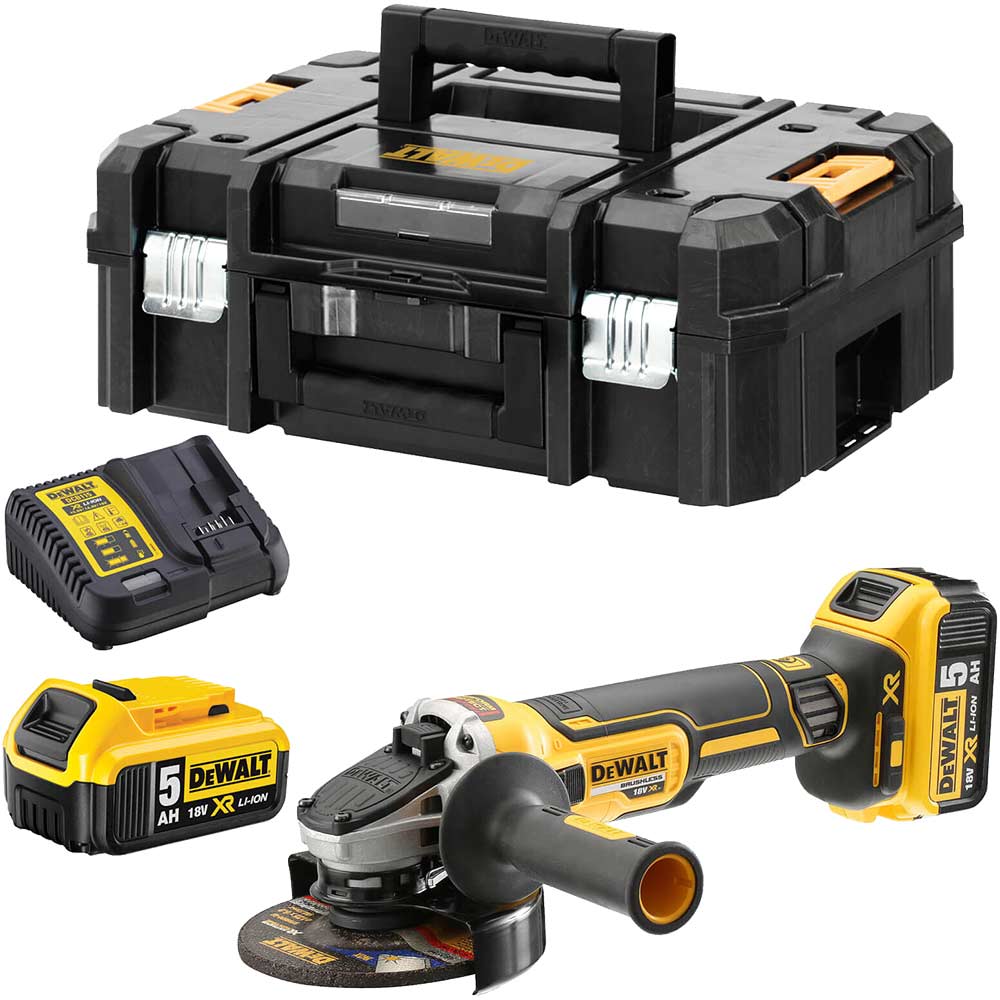
1. DeWalt DCG405 18v XR Brushless 125mm (kit)
- Disc size125mm
- Power18v brushless
- In the box2 x 5.0Ah, charger, TSTAK case
- SafetyE-clutch, brake under 2s, no-volt release
Pros
- DeWalt quotes 69 cuts through 1/2" rebar per 5.0Ah battery
- Electronic clutch reduces kickback if the disc pinches
- Complete kit, ready to cut out of the box
Cons
- No variable speed
- Dearer than bare-tool options if you already own DeWalt batteries
The DCG405 is the one we would buy for general metal cutting. The brushless motor holds its speed through rebar and box section, and the electronic clutch is the feature that matters most: if the cut closes on the disc, the clutch slips instead of throwing the grinder back at you. The kit includes two 5.0Ah batteries, which is the capacity you want for cutting metal, where smaller packs drain fast.
2. Einhell TP-AG 18/125 CE Q Li Brushless 125mm (kit)
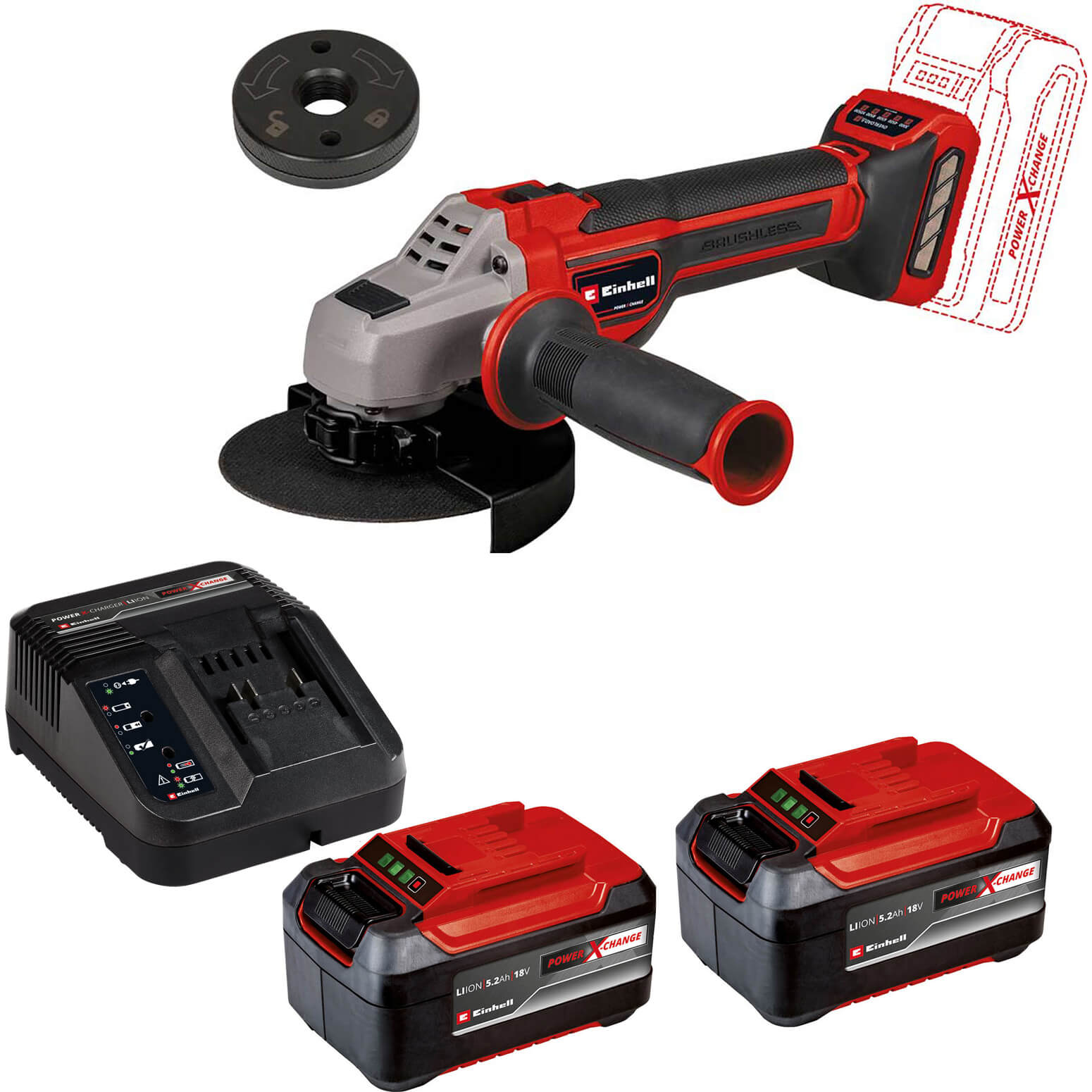
- Disc size125mm
- Speed3,000 to 10,500rpm
- In the box2 x 5.2Ah, charger
- Cut depth33mm
Pros
- Constant speed electronics hold rpm under load
- Variable speed and LED speed display
- Tool-free Quick Fix nut
- 10 year motor warranty when registered
Cons
- No electronic brake
- Power X-Change is less common on trade sites
For home workshops this is the value pick. You get two 5.2Ah batteries and a charger for less than many bare pro tools, plus constant speed electronics, which is the feature that stops the disc slowing as it enters thick steel. Variable speed also makes it useful later for wire brushing and flap discs.
3. Bosch Professional GWX 18V-15 P X-LOCK 125mm (bare)
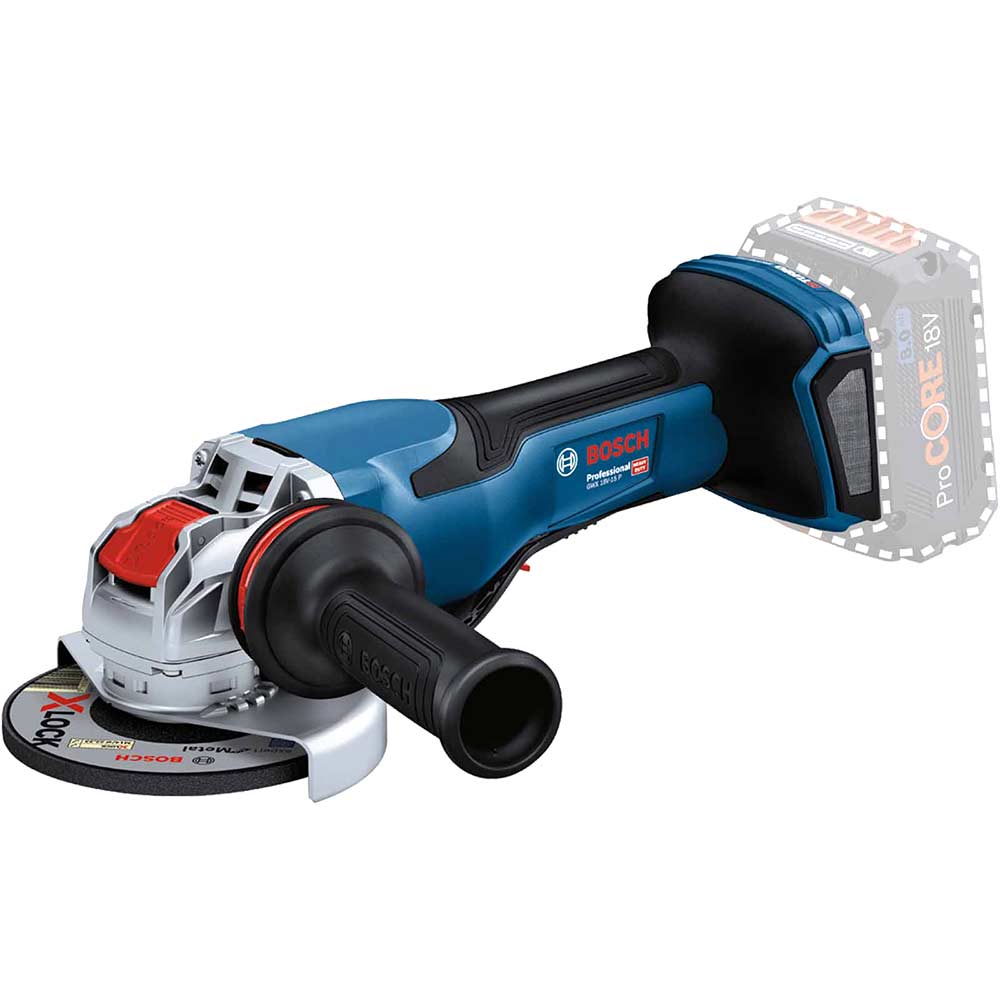
- Disc size125mm
- Power1,500W class Biturbo brushless
- SafetyKickBack Control, X-Brake, PROtection switch
- In the boxBare tool
Pros
- Corded-class power from 18v
- KickBack Control cuts the motor if the disc jams
- X-LOCK disc changes in seconds
Cons
- Battery and charger extra
- X-LOCK discs cost more than standard ones
The GWX 18V-15 P is the strongest 18v machine here. Bosch rates the Biturbo motor like a 1,500W corded grinder, so it cuts thick steel quickly. KickBack Control and the paddle-style PROtection switch make it the safest pro option if you already run Bosch Professional batteries.
4. Makita GA041G 40v XGT X-LOCK 125mm (bare)
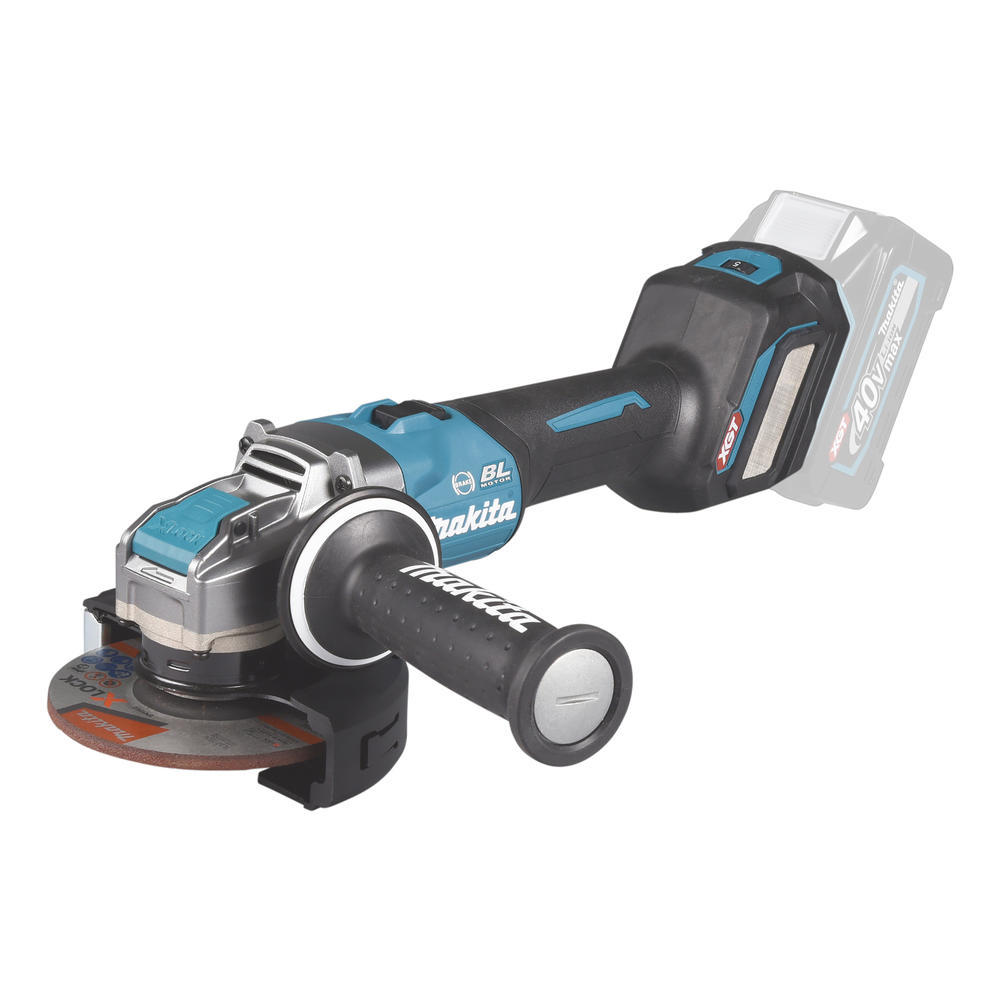
- Disc size125mm
- Speed3,000 to 8,500rpm
- Vibration3.4m/s²
- SafetyAFT, electric brake, anti-restart
Pros
- Very low 3.4m/s² vibration for long cutting sessions
- AFT shuts the motor down if the disc snags
- X-LOCK tool-free disc changes
Cons
- XGT batteries are expensive if you are new to Makita 40v
- Slide switch, not paddle
For anyone already on Makita XGT, the GA041G is excellent. Active Feedback Sensing (AFT) shuts the tool down if the disc suddenly slows, which is exactly what happens before kickback. Low vibration makes a real difference if you are cutting a whole stack of steel.
5. Makita GA5091X01 1,900W 125mm (240v)
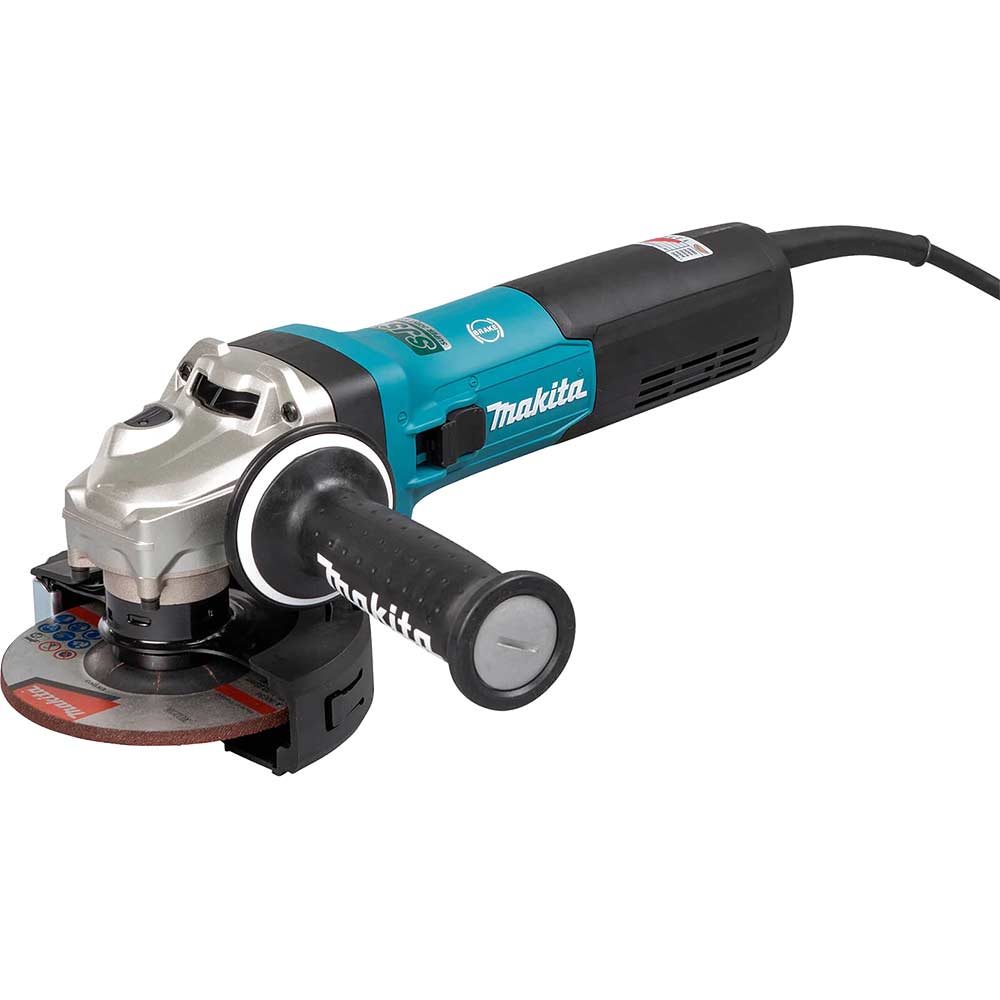
- Disc size125mm
- Power1,900W
- Speed2,800 to 11,500rpm
- SafetyAFT, mechanical brake, anti-restart
Pros
- Never runs out of battery
- Constant speed control and variable speed
- Mechanical brake stops the disc quickly
Cons
- Cable gets in the way on site
- Heavier than cordless
If you cut metal in a workshop, corded still makes sense. The GA5091X01 has 1,900W, constant speed, AFT and a brake, so it has the same key safety features as the premium cordless options with no batteries to buy.
6. DeWalt DCG430 18v XR Cut Off Tool 76mm (bare)
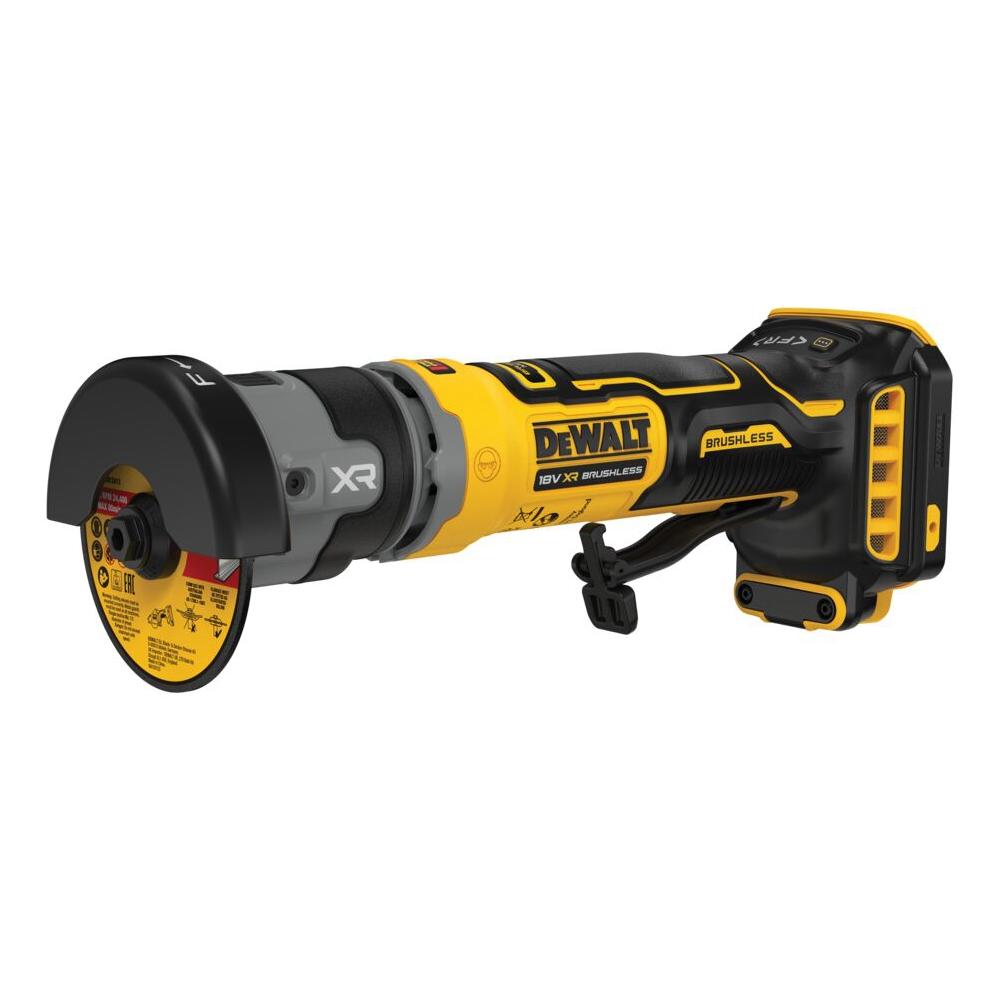
- Disc size76mm
- Weight1.1kg
- Discs includedDiamond and bonded abrasive
- FeatureReversible disc direction
Pros
- Fits where a 125mm grinder cannot
- Switch direction to send sparks away from you
- Light enough for one hand
Cons
- Shallow cut, not for thick bar
- Bare tool
Not a replacement for a full-size grinder, but brilliant for exhaust bolts, threaded rod and pipe in cramped spaces. The reversible direction lets you aim sparks away from your face or from a car's paintwork.
Which disc is best for cutting metal?
The disc makes more difference than the grinder. For most steel, use a 1mm thin cutting disc (often labelled "inox"). It removes less metal, cuts faster, uses less battery and puts less heat into the workpiece, so you get less blueing. Use thicker 1.6mm to 3mm discs for heavy bar or where you need a stiffer disc.
| Job | Best disc | Notes |
|---|---|---|
| Sheet steel, box section | 1mm inox cutting disc | Fast, low heat, clean edge |
| Rebar, solid bar | 1.6mm or 2.5mm cutting disc | Stiffer and lasts longer |
| Stainless steel | Iron and sulphur free (inox) disc | Stops contamination and rust spots |
| Cleaning up the cut | Flap disc, 60 or 80 grit | See our welding guide |
Check the disc speed rating
Every disc is printed with a maximum rpm. A 125mm disc is normally rated to 12,200rpm. Never fit a disc rated below your grinder's top speed, and never put a 125mm disc on a grinder built for 115mm with the guard removed. That is how discs shatter. Discs also have a use-by date, so check it before use.
How to get a clean cut without kickback
- Clamp the work so the offcut can fall away freely. Kickback usually happens when the cut closes and pinches the disc.
- Let the disc reach full speed before it touches the metal.
- Cut straight. Never twist or lean on a cutting disc. Side pressure is the main cause of shattered discs.
- Let the grinder do the work. Pushing hard slows the disc, overheats the metal and drains the battery.
- Stand to the side of the disc's line, never directly behind it.
Cutting metal indoors throws sparks a long way, so clear anything flammable. If you plan to cut masonry too, the dust risk is very different. Read our best angle grinder for concrete guide before you start. For ceramic and porcelain, see the best angle grinder for tile cutting.
Cordless or corded for metal?
Cordless is now powerful enough for almost all metal cutting, and it is far safer on site with no cable to trip on or cut through. The trade-off is battery cost. Budget for at least 4.0Ah batteries, ideally 5.0Ah. Small 2.0Ah packs struggle with a cutting disc. If you only work in a garage near a socket, a corded grinder gives you more power for your money.
Quick buying checklist
- 125mm grinder for general metalwork. 115mm if you mostly cut bolts and sheet.
- 1mm cutting discs for most jobs. 1.6mm for thick bar and heavy section.
- INOX discs for stainless steel. Standard discs leave rust spots.
- Electronic clutch or kickback brake. Metal pinches, and pinches cause kickback.
- A separate flap disc for cleaning up. Never grind with a cutting disc.
Expert corner: choosing a cutting disc like a fabricator
| Disc | Best for | Why |
|---|---|---|
| 0.8mm to 1mm | Sheet, tube, box section, bolts | Fast, cool cuts with a small burr. More cuts per battery. |
| 1.6mm | Solid bar, heavy angle, thicker plate | Stiffer, so it survives long, deep cuts better. |
| INOX marked | Stainless steel | Made without iron, sulphur or chlorine, so it does not contaminate stainless and cause rust. |
| Flap disc 40 to 80 grit | Deburring and cleaning up | Designed for side pressure. Cutting discs are not. |
The guard matters too. Cutting discs should be used with a closed cutting guard that covers both sides of the disc. The standard open grinding guard only protects one side, so if a thin disc shatters, fragments can come out the other side. Many grinders come with only the grinding guard, so check the box.
Expert tips that save time and money
- Support both sides of the cut so the offcut falls away. If the cut closes, it pinches the disc.
- Let the disc do the work. Pushing harder slows the disc, turns the metal blue and wears the disc faster.
- Aim the sparks down and away from you. Check what is behind the work first. Sparks can burn car glass and paint and set fire to rags.
- Keep a second grinder with a flap disc so you do not swap discs all day. Welders swear by this, and our welding guide explains which flap discs to buy.
- Cutting in tight spots under a car? A 115mm or a 76mm cut-off tool is safer than removing a guard. See our small angle grinder guide.
What owners actually say
These points come from UK trade and hobby forums. We have linked each thread so you can read the full discussion.
- On the MIG Welding Forum, owners agree that keeping more than one grinder with different discs fitted "saves changing". (MIG Welding Forum: what size angle grinder)
- They also point out that 115mm, 125mm, 180mm and 230mm grinders all use an M14 spindle thread, so nuts and wire brushes carry across sizes.
- Farming Forum members note that 125mm grinders often come with a 115mm guard too, so you can run either disc size. (The Farming Forum: 125mm vs 115mm)
Beginner mistakes to avoid
We see these again and again
- Grinding with the flat face of a cutting disc.
- Using a standard disc on stainless steel.
- Cutting with the offcut trapped, so the cut closes on the disc.
- Using a cutting disc with only the open grinding guard fitted.
Read the disc before you fit it
Every resin-bonded cutting or grinding disc sold in the UK carries markings under EN 12413. Two matter most:
- The use-by date is stamped on the metal centre ring as a "V" followed by the date, for example V12/2027. It is set no more than three years after manufacture. Out-of-date resin bonds can break up at speed.
- The maximum rpm must be equal to or higher than your grinder's no-load speed.
A disc's limit is really its rim speed, usually 80 metres per second. That is why bigger discs are rated for lower rpm: 80 m/s works out at about 13,300rpm for a 115mm disc, 12,200rpm for 125mm, 8,500rpm for 180mm and 6,600rpm for 230mm. Never fit a worn-down 230mm disc to a small grinder. It is still only rated for about 6,600rpm, and a 125mm grinder spins nearly twice that fast.
Sources: NovoAbrasive: cutting stainless steel (INOX) · MIG Welding Forum: what size angle grinder · The Farming Forum: 125mm vs 115mm · HSE HSG17: Safety in the use of abrasive wheels · Abrasive wheel marking explained (EN 12413)
Frequently asked questions
What size angle grinder is best for cutting metal?
A 125mm grinder is the best all-rounder. It cuts about 10mm deeper than a 115mm model and discs are easy to find. Use 230mm only for very thick steel.
Can I use a 115mm grinder to cut metal?
Yes. A 115mm grinder is fine for bolts, sheet and small box section, and it is lighter. It just has less depth of cut, about 28mm on most models.
Why does my cut metal turn blue?
Blueing is heat. Use a thin 1mm cutting disc, keep the speed up and do not force the cut. Pressing harder makes more heat, not a faster cut.
How many cuts will a cordless grinder get per battery?
It depends on the metal and battery. DeWalt quotes 69 cuts through half-inch rebar per 5.0Ah battery on the DCG405. Expect far fewer with 2.0Ah packs.
Do I need variable speed for cutting metal?
No. Cutting discs work best at full speed. Variable speed is useful for wire brushes, flap discs and polishing, so it is a bonus rather than a must.
What is an INOX cutting disc?
A disc made without iron, sulphur or chlorine in the bond. It will not contaminate stainless steel, so the cut edge does not rust.
Do I need a special guard for cutting discs?
A closed cutting guard is recommended. It covers both sides of the disc, while a grinding guard only covers one.
Can I use 115mm discs on a 125mm grinder?
Yes, with the correct guard. Both sizes use the same M14 spindle and 22.23mm centre hole. Check your grinder's manual, as the guard must suit the disc size.
More angle grinder guides
Still deciding?
Compare every angle grinder we list, with full specifications and live UK prices.
Browse Angle Grinders